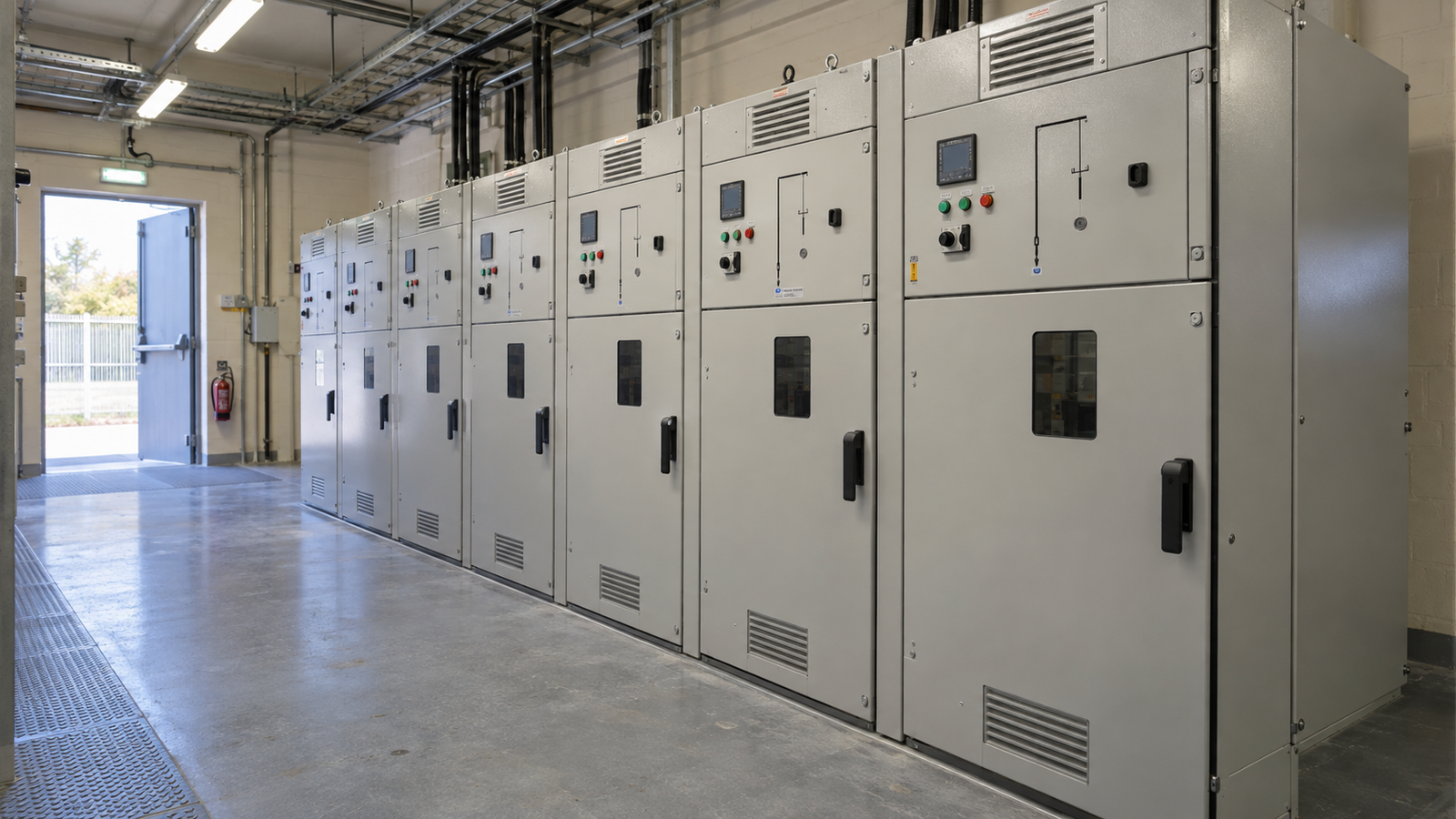
An international switchgear manufacturer can reach a promising Spanish project after important purchasing choices have already been made. The specification may favour an established design, the contractor may have an approved supplier list, and the engineering team may have completed its assessment. A competitive quotation then has limited room to change the outcome.
The transition towards SF6-free switchgear creates a reason to start those conversations earlier. It brings equipment selection, environmental performance and commissioning schedules into the same discussion. For Myralbe, the commercial opportunity lies in helping suppliers become relevant while buyers are still defining what they need.
The commissioning date now affects the specification
Under Regulation (EU) 2024/573, putting into operation medium-voltage distribution switchgear rated up to and including 24 kV that relies on fluorinated gases for insulation or interruption has generally been prohibited since 1 January 2026. Further restrictions follow in 2028, 2030 and 2032, according to equipment category, voltage, short-circuit rating and gas global warming potential.
These commissioning restrictions include defined exceptions and do not impose a blanket replacement requirement on equipment already operating. For a supplier, the useful commercial question is which forthcoming installations fall within its product’s technical capabilities and the applicable requirements.
The distinction between SF6-free and F-gas-free also matters. Some alternatives to sulphur hexafluoride use other fluorinated gases. Buyers need the actual gas composition and supporting documentation to assess a proposed design against its intended application and commissioning date.
Our view is that suppliers should bring this information into early project discussions, giving engineering and procurement teams time to evaluate the offer.
The buyer needs confidence in the complete installation
SF6 offers effective insulation and arc interruption, but releases of the gas carry a substantial climate impact. The European Commission identifies established medium-voltage alternatives, including air-based insulation and vacuum interruption. Their suitability must be assessed for the equipment and installation concerned.
That assessment gives the commercial conversation substance. A buyer considering a different switchgear design needs evidence of the required electrical ratings, fault performance and safety characteristics, alongside dimensions, environmental operating limits and maintenance arrangements.
Consider an industrial site planning an electrical upgrade. A proposed design might meet the required rating while raising questions about cable interfaces, the existing protection scheme or the shutdown window available for installation. Those questions need to reach the supplier’s technical team before the offer can become a practical purchasing option.
Environmental claims should be equally specific. A useful comparison states what is being measured, the assumptions used and the lifecycle stages included. Equipment manufacture, operating losses, gas leakage, maintenance and end-of-life treatment should be considered where relevant to the assessment.
A well-prepared offer gives the buyer a defensible basis for choosing the equipment and understanding how it will be supported.
Finding the right entry point in Spain
Red Eléctrica reported commissioning 212 substation bays in 2025. That provides concrete context for the equipment decisions accompanying Spain’s network development.
For a switchgear supplier, relevant accounts can include network operators, substation engineering firms, electrical contractors and industrial owners. Each should be approached according to its role. An operator may control technical acceptance; a consultant may write the specification; a contractor may purchase and install the equipment.
A supplier entering a utility’s purchasing system may first need product evaluation or supplier approval. A manufacturer pursuing an industrial installation may need to work with the owner’s electrical team and its appointed contractor. These routes call for different account priorities, evidence and expectations about timing.
There are also opportunities to investigate around protection, monitoring and associated substation equipment. For each product, the task is to identify who selects it, whether alternatives can still be considered and what would justify a technical discussion.
Building a commercial position with Myralbe
Myralbe’s work in electrification and critical infrastructure helps international suppliers develop those relationships in Spain. We begin with the product’s applications, ratings, available evidence and delivery capabilities, then identify the organisations that can specify, evaluate, integrate or purchase it.
Our market development in Spain includes direct outreach and follow-up in Spanish. We establish the account’s requirements, identify the people responsible for evaluation and coordinate discussions with the manufacturer’s specialists. Technical validation and compliance decisions remain with the appropriately qualified parties.
The commercial work continues through requests for documentation, technical clarification, partner assessment and quotation review. We keep track of the questions preventing progress, who must answer them and the next action agreed with the customer.
Where local support is needed, we help identify and assess potential integration, distribution or service partners. Their role should match what buyers require and what the manufacturer can commit to delivering.
Progress can mean acceptance for technical evaluation, an invitation to tender or agreement on a suitable local partner. Recording that stage gives the supplier a clearer basis for deciding where to invest its next commercial effort.
Bring your switchgear technology to the Spanish market
If you supply SF6-free switchgear, circuit breakers or related substation technology, tell us your voltage range and target applications.
Contact Myralbe to discuss the customers, project partners and local commercial work needed to develop your business in Spain.