Our principal specialisation
Energy Storage & Grid Integration
Commercial development for manufacturers of energy storage systems, power electronics, controls and electrical infrastructure.
Myralbe helps manufacturers develop business in Spain, Portugal and France: identifying suitable applications, reaching buyers and technical decision-makers, understanding procurement requirements and working through proposals, negotiations and commercial follow-up.
Our approach connects the product to the project.
A complete battery system, a power converter and a cooling subsystem each require a different customer base, purchasing route and commercial conversation.
How the industry works
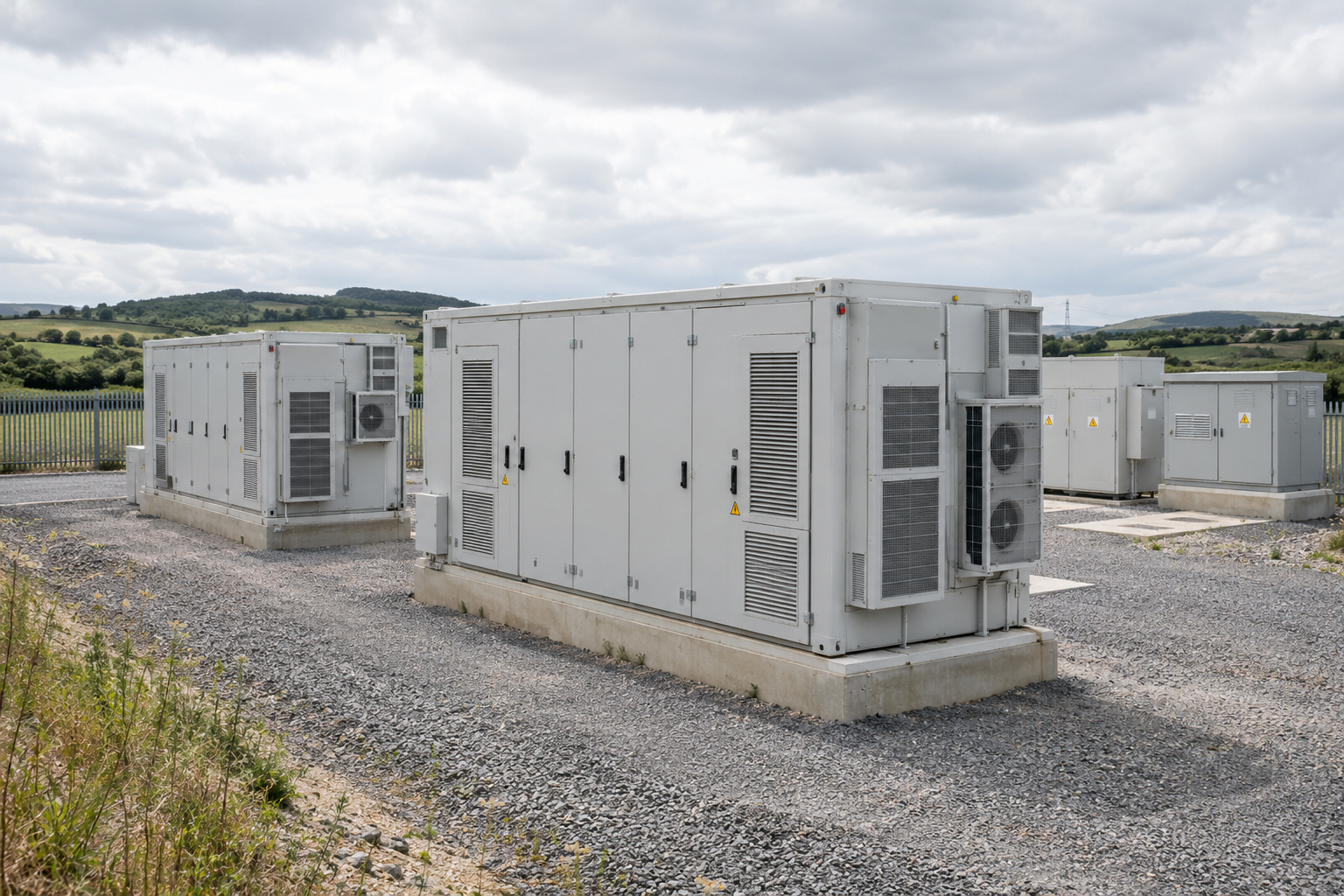
Storage, conversion, control and connection form one operating system.
Energy storage allows electricity produced or purchased at one time to be used later.
Its value depends on the application: shifting energy between periods, supporting renewable generation, managing a site’s electricity demand or providing services to the electricity system. Europe’s growing need for flexibility creates opportunities across this chain.
In a battery energy storage system—BESS—the batteries store energy, the battery management system monitors their condition and operating limits, and the power conversion system manages the conversion between direct and alternating current. Energy management and plant controls coordinate operation, while electrical infrastructure connects and protects the installation.
Commercial decisions therefore extend across several organisations. An asset owner may define the investment, an engineering firm the specification, an integrator the equipment architecture and an EPC contractor the purchase. Understanding those responsibilities determines where a manufacturer should enter the conversation.
Applications that shape the buying decision
Grid-connected storage can shift electricity between periods and participate in eligible flexibility or balancing services. The commercial case depends on the markets available to the asset, its connection conditions and its operating strategy.
For a manufacturer, useful qualification questions include who will operate the installation, which services are intended, what performance the equipment must sustain and how the proposed usage relates to its guarantees.
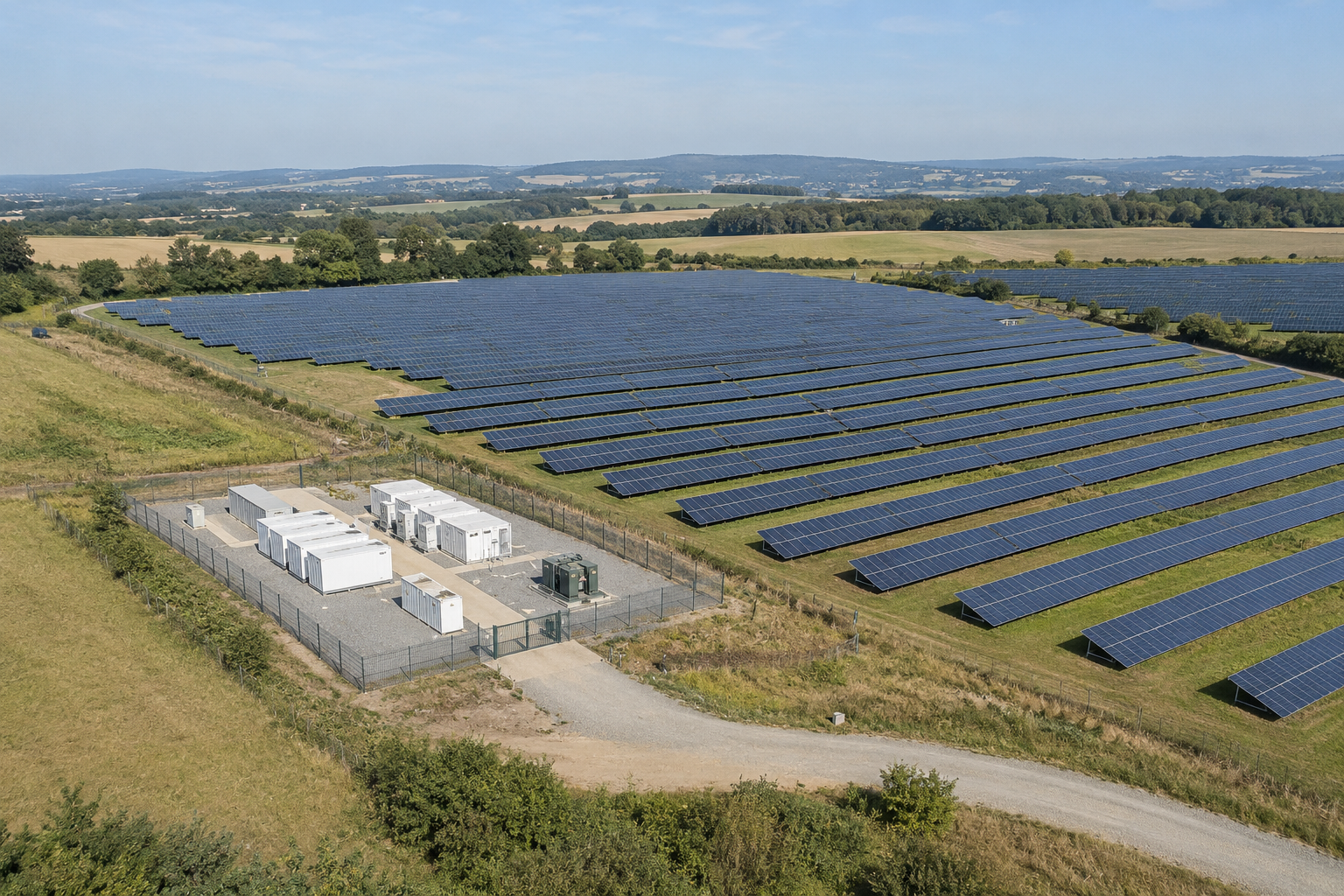
Storage can absorb part of a renewable installation’s production and discharge it later. Project requirements depend on the generation profile, connection capacity, charging permissions and the chosen electrical architecture.
The conversation must address how generation and storage share the connection, who controls their combined output and whether the battery is included in the original project or added to an existing installation.
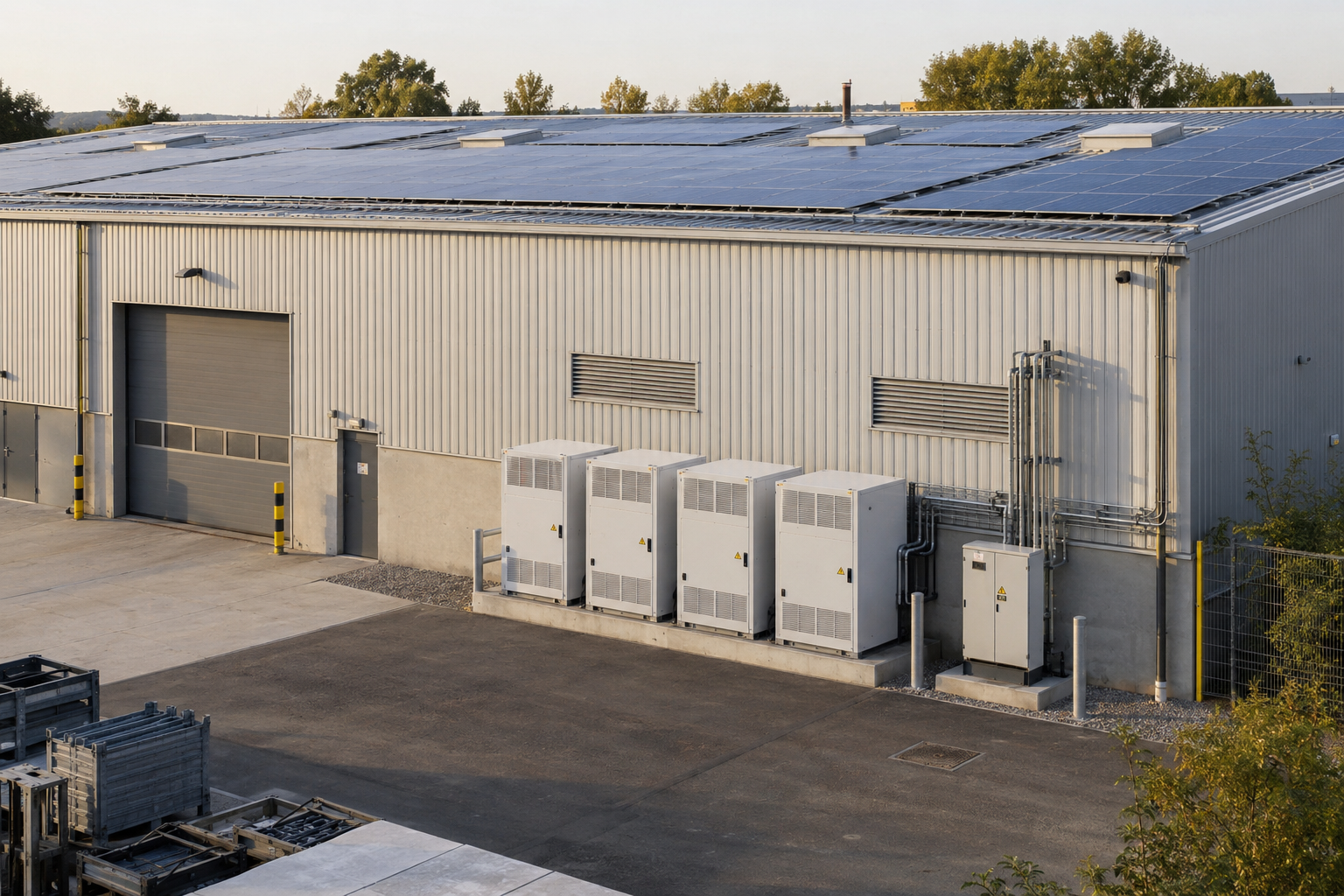
Industrial and commercial customers may consider storage to increase self-consumption, manage electricity purchases or reduce demand peaks where their tariff structure makes this valuable.
Qualification starts with the site’s consumption profile, electricity contract, existing generation and operational constraints. Production schedules, available space, maintenance access and the customer’s investment criteria can be as important as equipment specifications.
Some applications require critical loads to remain supplied during a network interruption or a site to operate independently.
These capabilities require a suitable combination of conversion equipment, controls, protection, switching and operating procedures. Grid-forming capability, island operation, black start and uninterrupted supply each need specific technical assessment.
Technology scope and routes to market
Complete battery energy storage systems
A complete-system supplier must connect its offer to the customer’s intended operation and procurement model.
Buyers need clarity on discharge power, usable energy, duration and the conditions under which those figures apply. MW describes power; MWh describes energy. Procurement should establish what the system can deliver at the agreed measurement point, including the effects of operating limits and losses. Usable energy available at full power is a meaningful consideration alongside nominal capacity.
Guarantees also need to be assessed separately: retained energy capacity, discharge power, round-trip efficiency and availability describe different aspects of performance. Their assumptions should match the proposed usage profile and degradation model.
The purchasing route may lead through a developer, asset owner, EPC contractor or system integrator. Myralbe identifies that route, establishes the project’s stage and brings the manufacturer into the relevant commercial and technical discussions.
We also help clarify the requested delivery scope: equipment supply, integration, commissioning support, service arrangements and the responsibilities expected from each party.
Battery subsystems, thermal management and safety equipment
Manufacturers of cooling equipment, enclosures, sensors, electrical auxiliaries and safety components often enter the market through an OEM or system integrator’s design and sourcing process.
The opportunity may concern qualification for a product platform and repeat supply across several projects. Reaching individual project owners alone can leave the organisation selecting the component outside the conversation.
Relevant questions include mechanical and electrical interfaces, environmental conditions, auxiliary consumption, maintenance access, testing requirements and production capacity. Operating temperature and approved equipment combinations can also affect the conditions attached to a battery warranty.
Myralbe identifies the product engineering, procurement and supplier-quality functions involved. We coordinate discussions around the manufacturer’s evidence, sample or evaluation requirements, qualification stages and purchasing programme.
For safety-related products, we help establish what evidence and integration responsibilities the buyer requires, with technical validation conducted by the appropriate specialists.
Power conversion systems and power electronics
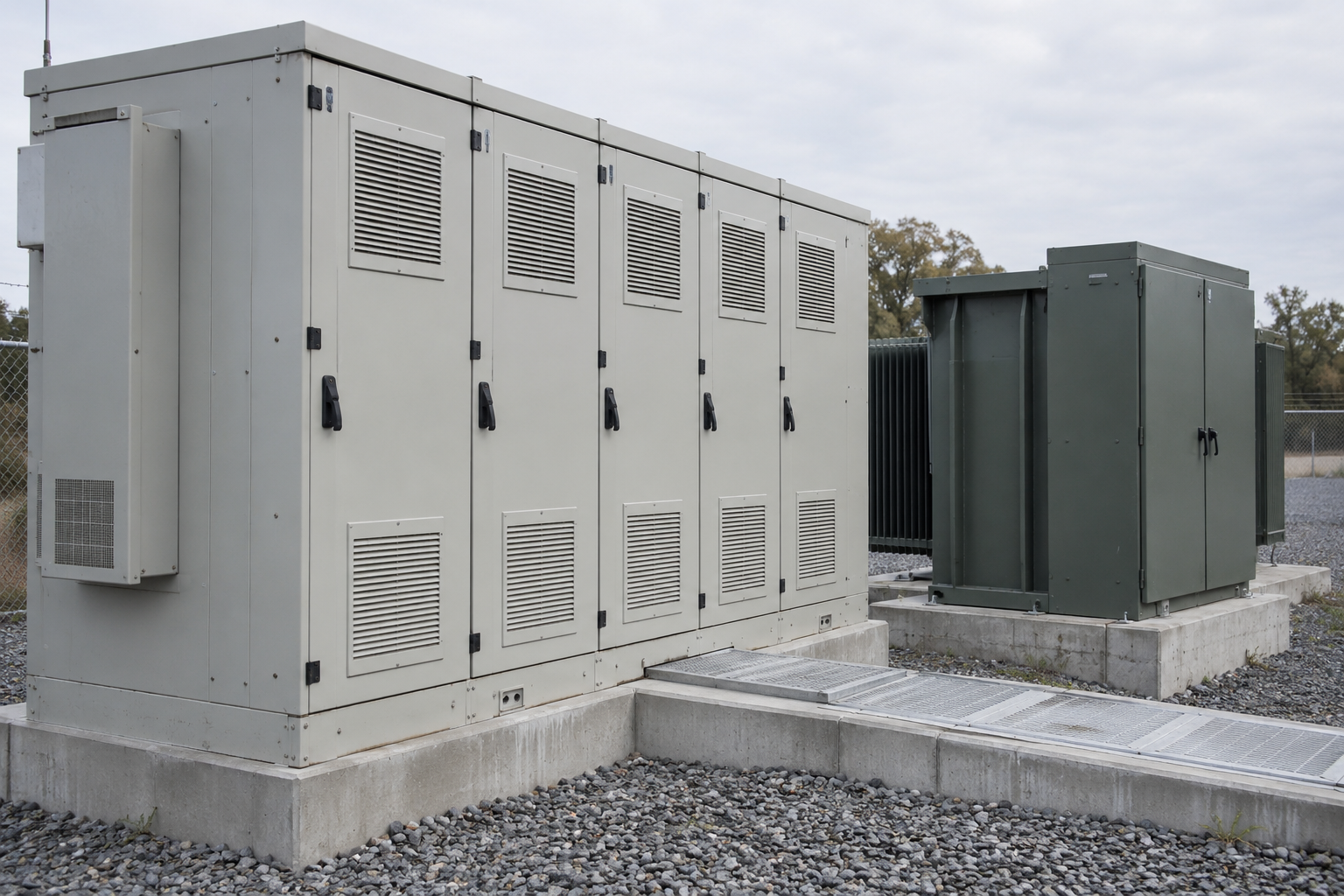
Power conversion equipment connects the battery’s electrical characteristics to the requirements of the installation and its network.
Potential customers include storage integrators, equipment manufacturers, EPC contractors and projects that specify conversion equipment directly.
Selection involves battery compatibility, operating modes, control interfaces and the evidence required for the intended grid connection.
Advanced functions need to be examined at both equipment and plant level. A grid-forming offer, for example, involves the inverter’s behaviour together with system controls and engineering arrangements.
Myralbe helps manufacturers reach the organisations choosing the equipment architecture and understand their evaluation process. We gather the requested application information, arrange technical exchanges and follow outstanding requirements through supplier assessment and quotation.
An important part of this work is identifying who provides the required models, documentation, integration support and commissioning assistance—and making those responsibilities clear before the commercial offer is finalised.
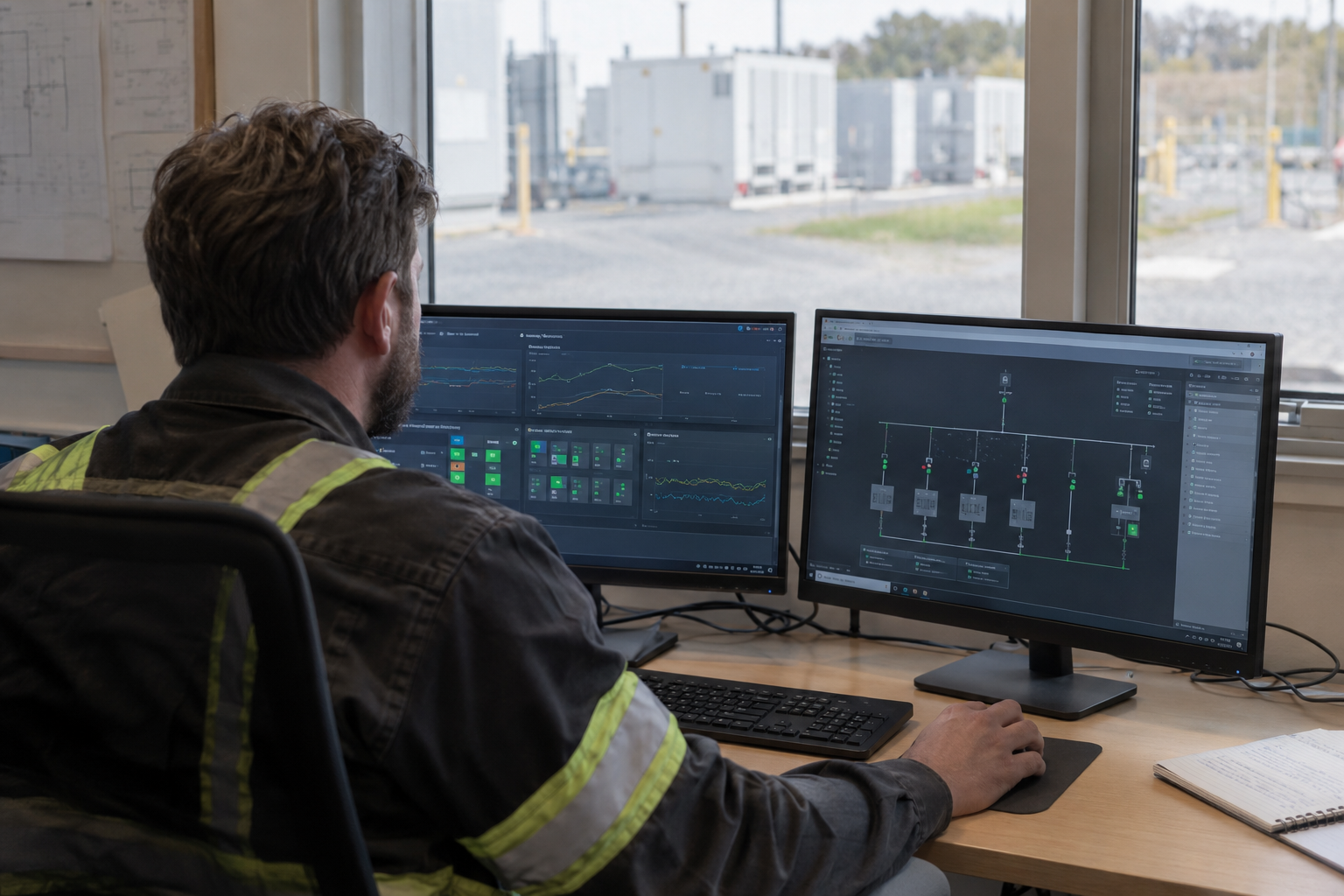
EMS, SCADA, plant control and optimisation software
Control and software suppliers must establish how their product fits into the customer’s existing operational architecture.
Battery management, energy dispatch, plant-level control, supervision and market optimisation perform different functions, although suppliers may combine some of them.
Procurement needs a clear account of which system issues commands, enforces limits, reports alarms and provides access to operational data.
The customer may be an integrator building a complete system, an owner standardising a portfolio or an operator improving an existing installation.
Commercial qualification should address integration scope, communications, data access, remote support, cybersecurity expectations and behaviour when communication is interrupted. Sharing a protocol is only one part of establishing that two systems will work together.
Myralbe identifies the technical and commercial owners of these decisions, documents the intended use and coordinates discussions between the supplier and the customer’s relevant teams. We also help clarify licensing, implementation, ongoing support and the conditions for an evaluation or pilot.
Transformers, switchgear, protection and electrical infrastructure
Energy storage projects require equipment around the battery and converter to connect the installation, distribute power, measure operation and respond to faults.
This can include transformers, medium-voltage switchgear, low-voltage equipment, protection relays, metering and supervisory controls. Grid integration involves the combined electrical architecture and its supporting studies.
The route to market commonly involves engineering firms, EPC contractors, panel builders, electrical contractors and specialist integrators. Network operators can influence connection requirements even when another organisation purchases the equipment.
Myralbe maps those roles and identifies when specifications and supplier choices are being established. We help collect the buyer’s requirements, coordinate clarification and follow quotations against the project programme.
Delivery scope deserves particular attention: installation responsibilities, civil and electrical interfaces, documentation, testing, delivery sequencing and site access should be understood alongside equipment price and lead time.
Monitoring, diagnostics and service technologies
For manufacturers serving operating assets, the commercial starting point is the condition and management of the installed fleet.
Potential needs include identifying underperformance, improving fault investigation, organising maintenance and obtaining clearer evidence of asset behaviour. Owners, operators and maintenance providers may each hold part of the purchasing decision.
An evaluation needs to establish what information the technology requires, whether that information is accessible and how its findings enter the customer’s operating workflow. The practical value may depend on whether a result leads to an inspection, maintenance action or change in operation.
Myralbe helps suppliers identify suitable fleets and operational decision-makers, define the problem under discussion and agree the scope of an evaluation.
Service arrangements also influence equipment procurement from the outset. Spare parts, remote monitoring, maintenance responsibilities and local response should be addressed before the order is placed.
European requirements belong in the commercial discussion
Connection status affects opportunity readiness
A storage project must have a credible route to charging and discharging under its connection conditions.
In Spain, Red Eléctrica’s guidance explains that storage access assessment considers its behaviour as generation and also its operation as demand. An announced project or proposed capacity therefore requires further qualification before it can be treated as a purchasing opportunity.
Myralbe records the connection status reported by the project team, the organisations responsible and the dependencies affecting procurement. This helps manufacturers distinguish early development discussions from projects approaching equipment selection.
Market participation affects equipment requirements
Wholesale trading, balancing and other system services involve their own participation arrangements and operational requirements.
The intended service influences the questions asked of the equipment supplier: response behaviour, communications, measurement, operating reserves and coordination with the party managing market participation. REN’s published system-service framework illustrates the distinct reserve services within the Portuguese system.
Commercial qualification should establish which services are intended, who is responsible for participation and what remains to be demonstrated.
Product conformity and site approval have different purposes
European market entry requires the applicable product documentation and conformity obligations to be addressed alongside the requirements of the installation.
The EU Batteries Regulation includes safety requirements for stationary battery energy storage systems and a framework for battery information and digital passports. Applicability and implementation dates must be checked for the product concerned.
Project teams also need to resolve their relevant connection, installation, safety and permitting requirements.
Myralbe helps surface documentation requests early and coordinate responses from the manufacturer and appointed specialists. Engineering validation, conformity assessment and project approvals remain with the responsible parties.
Local support influences supplier acceptance
A European buyer needs a practical answer to what happens after delivery.
Who provides technical assistance? Where are spare parts held? Who attends the site? Which language is available for operational support? What is included in the maintenance agreement?
Myralbe helps manufacturers assess the commercial need for local partners and clarify proposed support arrangements. The commitments offered to buyers should match the resources the manufacturer and its partners can provide.
How Myralbe develops the commercial opportunity
We begin with the manufacturer’s offer: product scope, target applications, available evidence, delivery capacity and commercial objectives.
This establishes which segments deserve attention and what a prospective customer must require for the product to be a credible fit.
We build a prioritised account base around the actual purchasing chain.
For a complete BESS, this may mean developers, owners and their delivery partners. For a subsystem, it may mean OEM engineering and sourcing teams. For software, it may mean integrators, operators and portfolio owners.
Each account is connected to its role in the decision.
We contact relevant organisations in Spanish, Portuguese and French, with international coordination in English.
The conversation establishes the application, current approach, unmet requirement, purchasing process and timing. The manufacturer receives the information needed to decide whether deeper technical engagement is justified.
A useful opportunity record contains enough substance to support the next decision.
Depending on the product and project stage, this includes:
- Application, location and intended operating use.
- Buyer, specifier, integrator and procurement route.
- Indicative scope, decision timetable and project programme.
- Connection and permitting status as reported by the project team.
- Technical evaluation criteria and requested evidence.
- Existing suppliers, alternatives and barriers to selection.
- Open questions, responsible parties and agreed next action.
We prepare and coordinate technical meetings so that the manufacturer’s specialists can focus on the requirements that matter.
We remain involved as an opportunity moves towards quotation and purchasing decisions.
This includes following technical clarifications, tracking proposal feedback, identifying changes in scope and coordinating discussions about price, delivery, payment terms, warranties and service responsibilities.
Activity, decisions and next actions can be maintained in the manufacturer’s CRM or an agreed shared system. The commercial team retains a clear history of the opportunity and the work still required.
Principal markets
Spain
Spanish-language commercial execution across the developers, integrators, engineering firms, contractors and industrial customers relevant to the manufacturer’s offer.
Portugal
Portuguese-language account development, with qualification shaped around the local purchasing chain, project requirements and implementation partners.
France
French-language commercial development across the organisations specifying, integrating, purchasing and operating the relevant technologies.
Wider European and international reach
Additional mandates can be structured around the product, customer base and commercial resources required.
Where does your product fit—and what is preventing adoption?
You may need access to developers before specifications are fixed, qualification with storage integrators, a stronger route to industrial customers or local follow-up on opportunities already in progress.
Tell us what you manufacture, where you want to grow and where the commercial process is getting stuck. We can assess the accounts, purchasing routes and execution work that would make a mandate useful.