Market development · Portugal
Market development in Portugal
Native Portuguese commercial execution for manufacturers of industrial equipment, components and technology.
Myralbe identifies relevant customers and partners, develops commercial relationships in Portuguese and follows opportunities through application review, technical discussions, quotations and purchasing decisions.
Portugal can be developed as a standalone mandate or within a coordinated Iberian programme. In either case, the work has defined accounts, responsibilities and reporting.
Technical electronics manufacturing relevant to Portuguese market development
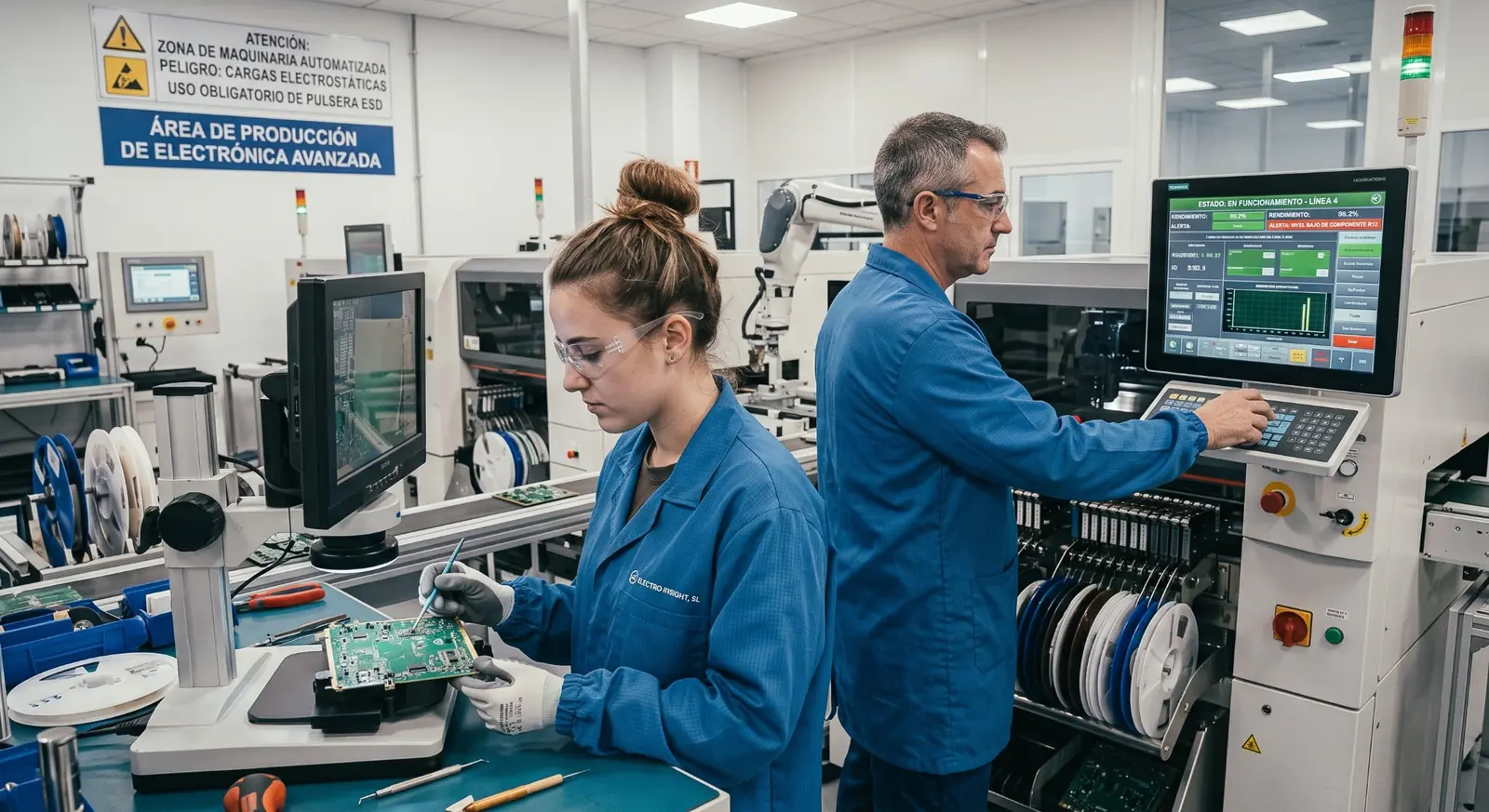
Market perspective
A Portuguese market strategy begins with the product’s intended application and the organisations able to use, incorporate, specify or supply it.
A component manufacturer may need machinery builders and OEM engineering teams. An automation supplier may need production plants and integration partners. A process-equipment manufacturer may enter through an industrial operator, an engineering firm or a contractor responsible for a wider installation.
We establish that route before approaching accounts.
For each organisation, we distinguish the operating site, the purchasing entity and the people responsible for technical and commercial approval. We investigate whether those responsibilities sit in Portugal, within an Iberian structure or elsewhere in the customer’s group.
Native-language engagement connects the local requirement with the decision process governing the purchase.
Regional focus
Portugal contains distinct manufacturing and infrastructure ecosystems. These provide starting points for research; the account strategy follows the individual application and purchasing route.
The account map can include additional locations where the manufacturer’s applications justify development.
We use industrial concentration to prioritise research, meetings and visits, then verify the relevance of each account through its activities and requirements.
Routes to market
For equipment purchased by a production plant, warehouse or operating facility, we identify the requirement and the functions responsible for evaluating it.
That may involve operations, engineering, maintenance, management and purchasing.
We establish whether the customer buys the equipment directly or expects a contractor or integrator to supply the complete solution. Qualification includes the existing operation, installation conditions, required improvement and arrangements for ongoing support.
For components and subsystems, we identify the equipment or product in which the manufacturer’s solution could be incorporated.
Engagement follows the application and the customer’s selection process: specification review, technical evaluation, samples where required, supplier assessment and commercial negotiation.
We map engineering and purchasing responsibilities separately and coordinate the manufacturer’s response to the information requested.
The opportunity is followed through the customer’s actual approval stages and production requirements.
For products incorporated into a wider installation, we establish who defines the requirement, who prepares the specification, who purchases the equipment and who implements it.
Relevant organisations may include automation integrators, electrical contractors, panel builders, process-engineering firms, EPCs and specialist installers.
We qualify the project stage, supply package, interfaces and responsibilities for commissioning and service.
The account strategy follows the manufacturer’s place within that project.
A Portuguese partner needs a defined commercial and technical role.
We assess customer coverage, application knowledge, existing product lines, sales resources and the support needed to develop the manufacturer’s offer.
Depending on the technology, qualification may include stock capacity, workshop resources, installation capability, training requirements and after-sales arrangements.
Partner discussions establish how enquiries will be handled, which accounts will be developed and what support each organisation will provide.
We identify the relevant purchasing category, business requirement and supplier-engagement process.
Published procedures show why this needs account-specific work. REN’s purchasing function manages goods, services and works for its group companies and provides a common supplier gateway through Source 360°.
We establish the responsible technical and purchasing teams, the relevant qualification requirements and the procurement stage reached.
For energy and storage projects, we also qualify the owner, project configuration, connection conditions, appointed engineering or integration parties and expected purchasing timetable. ERSE has approved specific conditions for restricted network access by generation and standalone-storage installations, making connection arrangements a relevant part of project assessment.
We use published procurement information to identify contracting authorities, supply requirements, awarded projects and the organisations involved.
Portugal’s BASE portal centralises public-contract information. Live procurement procedures use the applicable notices, documents and electronic tender platforms identified for the procedure.
We assess whether the manufacturer’s route concerns a direct equipment purchase, a specialist package or supply to a contractor delivering a wider project.
The work follows the actual scope, purchasing requirements and timetable.
Myralbe in Portugal
We conduct account outreach, commercial discussions and follow-up in native Portuguese.
The approach is grounded in the application: what the customer produces or operates, where the technology could fit and what would justify evaluating it.
Initial conversations establish relevant responsibilities, current requirements and the account’s interest in a further discussion.
We prepare meetings, coordinate exchanges with the manufacturer and maintain written follow-up around the questions and actions agreed.
Technical assessments are handled with the manufacturer’s responsible specialists.
We define the target market using applications and account-selection criteria.
Research distinguishes company groups, Portuguese entities, operating sites and potential partners. Each account is included for a stated reason connected to the manufacturer’s offer.
For a specialised application, this can support detailed development of a bounded account universe.
Coverage is tracked through clear stages:
- Relevant accounts identified.
- Activities and application fit verified.
- Purchasing responsibilities investigated.
- Accounts approached.
- Discussions developed.
- Requirements qualified.
- Outstanding research or contact gaps recorded.
The account list is updated as market evidence changes.
We identify candidates against the role the manufacturer needs: customer development, product supply, integration, installation or service.
Evaluation considers the partner’s relevant customer base, technical capability, sales priorities and capacity to follow opportunities.
We also establish existing relationships and territory arrangements before developing a proposed channel structure.
Progress is tied to concrete actions such as product training, an agreed target-account plan, a joint customer discussion or clarification of commercial terms.
Partner interest is followed through to an agreed working arrangement.
We identify and approach the people relevant to the application and commercial decision.
A technical contact may assess suitability. A maintenance team may define service expectations. Management may approve an investment. Purchasing may negotiate and issue the order.
We establish those responsibilities account by account.
Meetings and site visits have defined objectives, with the manufacturer’s specialists involved when technical depth requires their participation.
After each discussion, we record the requirement, unresolved questions, responsible people and next step.
We connect Portuguese account development with the manufacturer’s existing commercial organisation.
At the start of the mandate, we clarify current customers, distributors, territory arrangements, group accounts and responsibilities for technical support, quotations and negotiation.
For an Iberian programme, Portuguese opportunities remain identifiable within the shared reporting structure. Related accounts and group decisions are linked where relevant.
We establish which organisation purchases the product and which teams need to participate, then coordinate local engagement with the manufacturer’s wider resources.
Opportunity qualification
What does the customer need to purchase, improve, replace or develop?
We document the application, existing solution and the requirement reported by the account.
Which technical conditions determine whether the manufacturer’s solution is suitable?
We gather the relevant operating information, interfaces and performance requirements for assessment by the manufacturer.
Who specifies the product, who approves it and who places the order?
We identify the purchasing entity and any group function, integrator, contractor or distributor involved.
What information, testing or supplier assessment does the customer require?
The sequence varies by account. EDP’s published supplier journey distinguishes presenting a company’s capabilities from formal registration and applies supplier qualification to specified purchasing categories.
We record the process that applies to the opportunity and the stage reached.
What quantities or project scope are being considered, and what must the supplier provide?
Qualification includes relevant delivery expectations, pricing assumptions, installation or service requirements and purchasing conditions.
What needs to happen next, who is responsible and what timing has been agreed?
The action may concern a technical discussion, sample, site visit, document exchange, quotation or purchasing review.
Follow-up is organised around that decision.
Field activity
Field activity is selected around relevant accounts and a clear reason for meeting.
Preparation includes the organisation’s activity, known requirements, participants and the information needed from the discussion.
A site visit can help clarify operating conditions, installation constraints or the scope of a proposed intervention. Technical conclusions are coordinated with the manufacturer and the customer’s responsible teams.
Trade-fair activity follows an account plan: organisations to approach, relevant applications and follow-up objectives.
Findings are then incorporated into the account record and the manufacturer’s response.
Reporting and accountability
Reporting is organised through the manufacturer’s CRM or an agreed working format.
The record can include:
- Account coverage: relevant companies and sites identified, verified and approached.
- Stakeholder mapping: technical, management, purchasing and partner responsibilities.
- Commercial activity: conversations, meetings and written exchanges completed.
- Qualified requirements: applications, buying routes and evaluation stages.
- Partner development: candidates assessed, capabilities discussed and actions agreed.
- Proposal progression: quotations, objections, requested revisions and purchasing status.
- Market feedback: recurring requirements, reasons for rejection and support expectations.
- Next actions: responsibilities, agreed dates and unresolved issues.
For a coordinated Iberian mandate, reporting shows the Portuguese activity and its relationship with shared accounts or group decisions.
The manufacturer can see what has progressed, what remains uncertain and where its involvement is needed.
Mandate scope
A mandate can focus on:
- Developing direct industrial customers.
- Identifying machinery builders and OEM applications.
- Evaluating distributors, integrators or service partners.
- Developing engineering and contractor relationships.
- Progressing existing Portuguese enquiries and proposals.
- Establishing Portuguese account development within a wider Iberian programme.
The scope defines the products, applications, target accounts, responsibilities and activity plan.
It can begin with one segment or a selected account universe and expand as customer evidence supports further development.
Bring your products, target applications and existing market relationships.
Together, we define the relevant Portuguese accounts, the route to purchase and the commercial work needed to develop them.