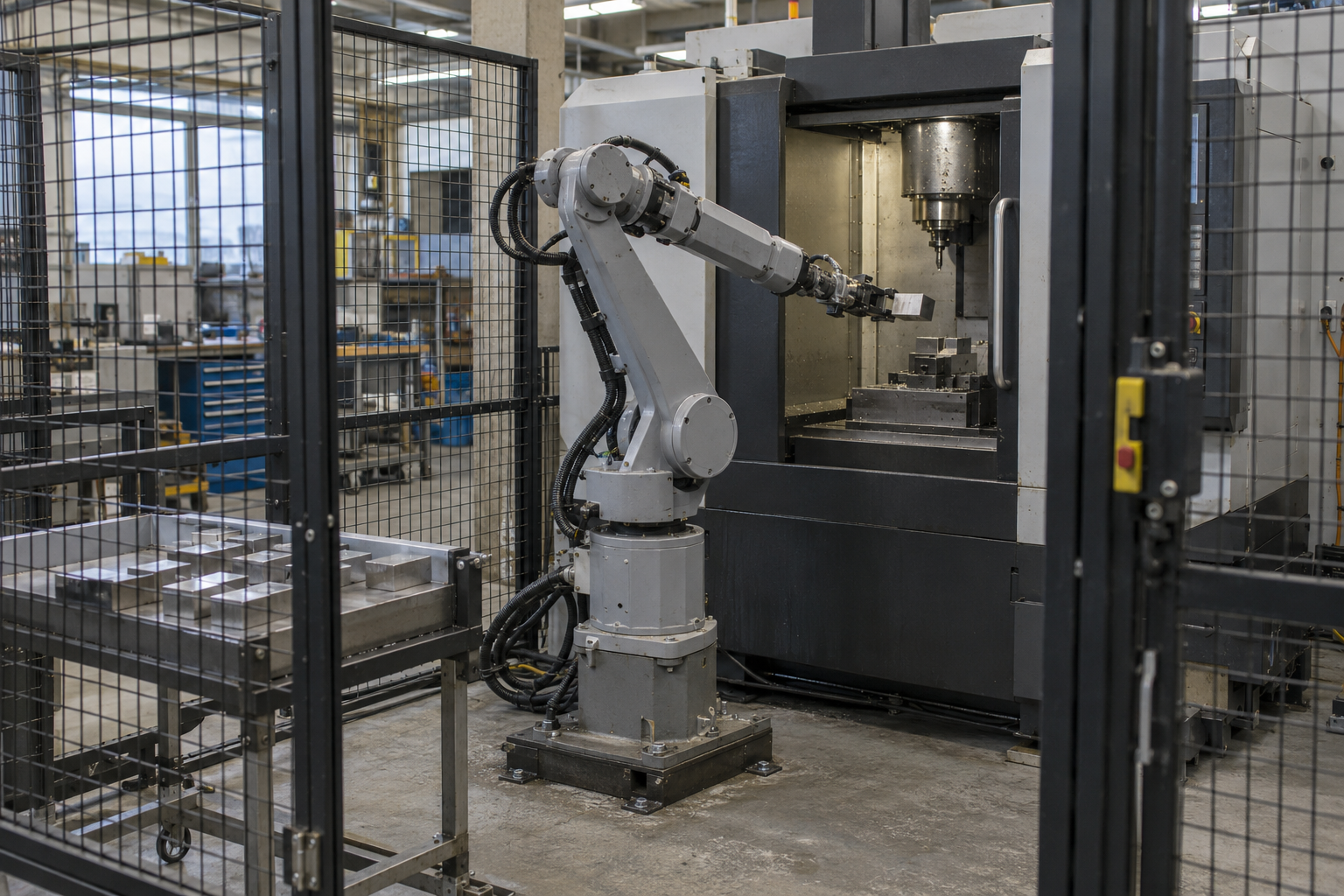
A new factory announcement in Spain or Portugal can look like an immediate opportunity for an automation supplier. Yet the announcement rarely says which equipment remains to be selected, who controls the specification or whether the project has an approved investment budget.
Those are the questions that turn nearshoring into useful commercial work. For manufacturers of robotics, handling equipment, storage systems and industrial software, the opportunity depends on a particular operation preparing to change.
What the nearshoring discussion tells suppliers
Nearshoring means locating production or supply closer to its destination market. In its EMEA nearshoring analysis, Cushman & Wakefield identifies Spain and Portugal among the locations that could attract investment, particularly as existing industries evolve. Its property outlook includes both new facilities and the reuse of existing buildings.
Automation can help a relocated operation achieve the output, consistency and availability its customers require. Its investment case nevertheless depends on the process: product mix, achievable utilisation, implementation cost, skills and the value of shorter delivery times.
European labour costs also vary substantially. Eurostat’s 2025 estimates show why a single assumption about “European wages” is an insufficient basis for an investment calculation. The buyer needs its own staffing and operating baseline.
Myralbe’s commercial reading is that suppliers should investigate where these changes create a requirement their technology can meet. A relocation strategy alone does not establish demand for a particular robot or warehouse system.
Find the investment trigger behind the announcement
A useful target account has a reason to examine its operation. Three situations deserve different questions.
A new production facility may need equipment while the layout is still being developed. The supplier should establish who will operate the plant, which engineering organisation is specifying the systems and when suppliers can enter the evaluation. Waiting until construction finishes may mean arriving after equipment contracts have been awarded.
An existing factory receiving additional production needs a different discussion. Which products are moving? What happens to batch sizes, shifts and material movements? The constraint could sit at machine loading, intermediate storage, inspection or dispatch. The investment announcement does not identify it.
A distribution operation expanding to serve regional customers may need more storage, faster order preparation or different handling equipment. Qualification should establish whether the operator, its customer or a property owner controls the relevant expenditure. A building lease and an equipment purchasing decision are separate events.
Public announcements provide an initial lead. Conversations must confirm which decisions remain open and whether the supplier has a credible application.
Follow the material through the proposed operation
Consider an illustrative manufacturer adding a second production line. Its output plan increases, but the existing loading area, intermediate storage and dispatch process remain unchanged.
A commercial discussion should establish how materials reach the line, how often they move, their dimensions and weights, where they wait and what happens during peak periods. The customer may be concerned about missed replenishment, repeated handling or insufficient space for completed orders.
These details help the supplier decide whether to examine conveyors, mobile transport, specialised handling equipment or a change to storage. They may also show that the proposed technology addresses the wrong constraint.
A customer site visit can make those questions more precise. Walking the route with operations and maintenance personnel helps identify interfaces and operating restrictions to pass to the manufacturer’s specialists. Engineering assessment, equipment sizing and safety decisions remain with the responsible technical teams.
Reach the people who can progress the purchase
The plant manager may explain the operational objective while central engineering sets the equipment standard. Procurement may negotiate the contract after an integrator has selected the technology. Local maintenance may need to accept the proposed support arrangement.
For a complete system supplier, the relevant route could therefore involve the end customer and its appointed integrator. A component supplier may need to develop the machinery builder that will incorporate its product.
The objective is to understand that route early enough to participate. A useful next step might be a layout review, a technical meeting, receipt of operating data or confirmation of the supplier approval process.
How Myralbe develops these accounts
Myralbe’s automation and intralogistics market development connects account research with direct customer engagement in Spain and Portugal.
We identify relevant investment signals, prepare an application-specific approach and contact the people involved in the operation. Follow-up takes place in Spanish or Portuguese, with coordination in English for international manufacturers. Where appropriate, the work includes personal sales meetings and site visits.
Myralbe MI records what came from public research, what the customer has confirmed, unanswered questions and the next action with its owner. An account contacted about an expansion remains unqualified until the necessary information supports progression.
As requirements become clearer, we coordinate technical exchanges, follow proposals and maintain the customer relationship through the purchasing process.
Develop the opportunities relevant to your equipment
If your technology serves factory automation, industrial handling or warehouse operations, contact Myralbe with your product scope and target applications. We can discuss the accounts, customer visits and continuing commercial work needed to develop your position in Spain and Portugal.