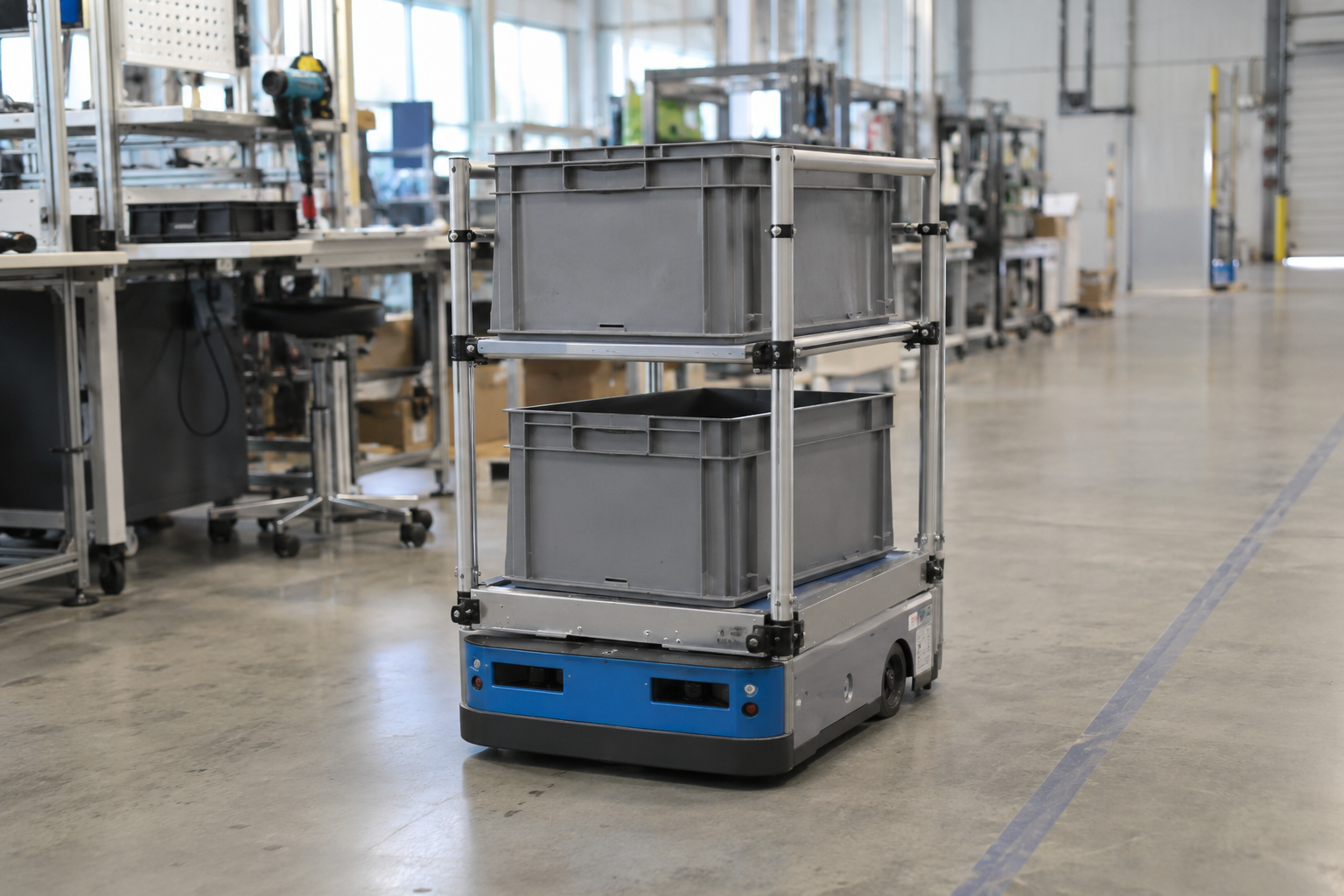
An autonomous mobile robot supplier entering Spain or Portugal needs more than a list of factories interested in automation. It needs to establish which material movement could justify investment, who owns the problem and what the customer would require before considering a purchase.
There is clear evidence of adoption. The International Federation of Robotics recorded 117,500 transport and logistics service robots sold worldwide in 2025. This broad global category provides context; identifying an addressable project still requires work at individual sites.
For Myralbe, that work begins with the operating conditions behind an enquiry and continues through customer conversations, visits and coordination with the supplier’s specialists.
Define the movement before discussing the fleet
“We want to automate internal transport” is a starting point. A useful discussion establishes where goods are collected, where they are delivered, what interrupts the movement and why the company is considering a change.
A supplier might investigate a plant transporting component carts from storage to assembly. The question is whether automation can serve that particular flow through normal shifts and peak demand.
We would prepare the conversation around four areas:
- Load and handover. What are the dimensions, weight, stability and supporting pallet, cart or container? Who loads and unloads it? Long materials require attention to their handling geometry as well as their weight.
- Route and operating environment. Which aisles, doors, crossings, ramps and floor conditions would the equipment encounter? Where do pedestrians, forklifts or other vehicles share the route?
- Required capacity. How many movements occur during a normal shift and at peak periods? How much time is spent travelling, waiting, loading or unloading? Which delivery delays affect production?
- Control and support. What triggers a transport request? Which warehouse, manufacturing or enterprise systems need to exchange information? Who would manage charging, exceptions, maintenance and service calls?
These are questions to take to the manufacturer’s technical team. Product specifications should then be assessed against the actual application.
Use the site visit to close information gaps
A drawing and a telephone call may leave important uncertainties. A site visit can bring the commercial conversation together with the people who move materials, operate the line and maintain the equipment.
For example, an aisle shown as clear on a layout may regularly serve as temporary storage. The buyer can explain why that happens and whether the practice can change. That information belongs in the assessment before a supplier proposes an operating arrangement.
ISO 3691-4:2023 covers safety requirements for driverless industrial trucks and their systems, including AMRs and AGVs. Its published scope explicitly recognises the importance of the operating zone. Technical suitability and safety therefore need assessment by the responsible specialists.
Myralbe can prepare and attend customer visits, represent a supplier in the commercial discussion and coordinate the technical follow-up. A useful visit ends with agreed information requests and a next action, whether that means further assessment, a proposal or pausing the account.
Agree how the customer would evaluate a proposal
Before arranging a demonstration or pilot, establish who must accept its results. Operations may assess delivery reliability; maintenance needs to understand recovery and support; IT evaluates interfaces and access; safety specialists assess the installation; purchasing and management consider contractual terms and investment.
The proposed evaluation should state the flow being tested, operating conditions, duration and acceptance criteria. These might include completed movements during representative demand, successful handovers, manual interventions, charging availability and recovery from agreed exceptions.
MiR’s deployment guidance similarly asks customers to review the application, plant layout, fleet integration and service plan. Those issues provide a useful basis for preparing questions, although another manufacturer’s solution requires its own assessment.
Commercial assumptions also need to be explicit. Time released from manual transport must have a defined use in the buyer’s business case. Equipment, integration, training, service and any necessary site changes belong in the comparison. A successful demonstration alone does not establish the investment return.
Develop the account locally
Myralbe’s market development in Spain and Portugal connects supplier capabilities with identifiable applications and purchasing relationships. We research relevant accounts, identify contacts, make individual approaches and investigate the customer’s current operation and reasons for considering change.
A contacted company remains at that stage until the conversation provides enough evidence to qualify it. Interest in robotics, by itself, leaves the application and purchasing process unresolved.
Myralbe MI keeps the commercial record together: information source, contact history, confirmed requirements, open questions, account status, next action and owner. The supplier can see what is known and what still needs to be established.
We also help examine potential local integration, distribution or service partners. As discussions progress, we coordinate technical meetings, follow quotations and maintain direct customer contact. The supplier and its appointed specialists remain responsible for technical assessment and delivery commitments.
Find the applications your technology can serve
If you manufacture AMRs, AGVs, automated handling equipment or supporting software, share your load capabilities, target applications and support model.
Contact Myralbe to discuss customer development and direct commercial representation in Spain or Portugal, starting with the material flows your technology is equipped to address.