Electrification & Critical Infrastructure
Commercial development for manufacturers of electrical distribution, protection, control and power-continuity technologies.
Myralbe helps manufacturers develop business in Spain, Portugal and France by reaching the organisations that specify, assemble, purchase, install and operate their equipment.
We build the commercial approach around the application:
expanding an industrial plant, supplying a new facility, modernising a substation or maintaining power to essential operations. Each involves different technical requirements, purchasing responsibilities and conditions for supplier acceptance.
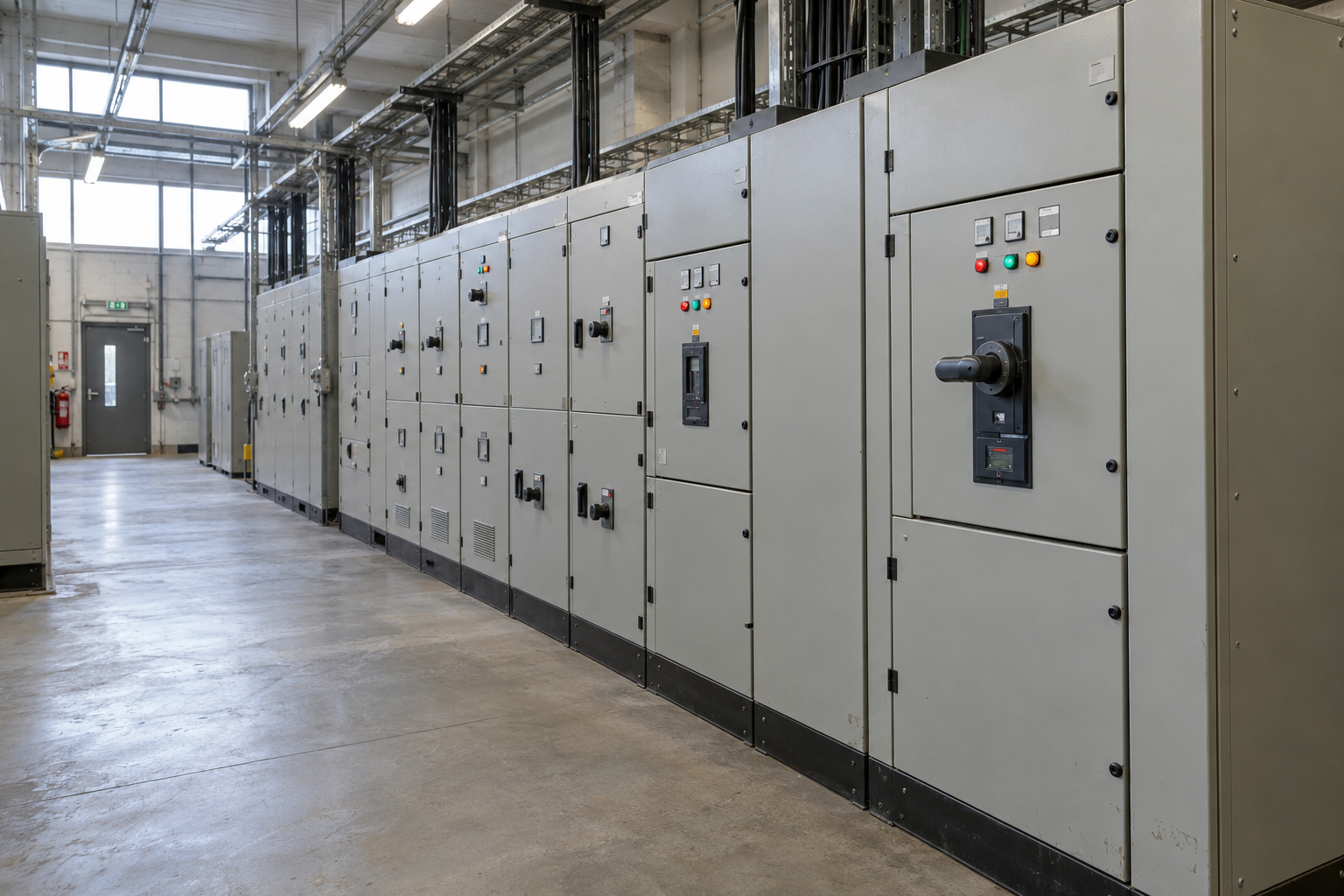
Electrical infrastructure transforms voltage, distributes power, controls loads, clears faults and supplies equipment under the conditions required by the application.
Electrification introduces additional electrical demand through industrial processes, transport, heating and other uses.
New loads must be accommodated alongside existing equipment, network capacity and the facility’s operating requirements. European grid development is closely connected to this expansion of electricity use.
Critical applications add another requirement: maintaining essential operations during defined disturbances, equipment failures and maintenance activities.
The buying decision consequently extends beyond an individual product. Customers evaluate how equipment fits the electrical architecture, what happens when operating conditions change, how it can be maintained and who supports it after installation.
For manufacturers, commercial development starts with understanding those decisions and reaching the people responsible for them.
Manufacturers need access while specifications, equipment configurations and supplier lists are being developed. The organisation defining the equipment may be different from the contractor placing the order.
The opportunity depends on what the existing installation can accommodate, which changes are required and how the customer intends to implement them. Equipment selection must fit the expansion programme and its electrical interfaces.
Customers must establish compatibility, installation scope, testing responsibilities and the time available to complete the work. A technically suitable replacement also needs a practical route into the existing installation.
The discussion begins with the loads to be supported, acceptable interruption, required autonomy and maintenance strategy. These requirements shape the architecture and the equipment considered for procurement.
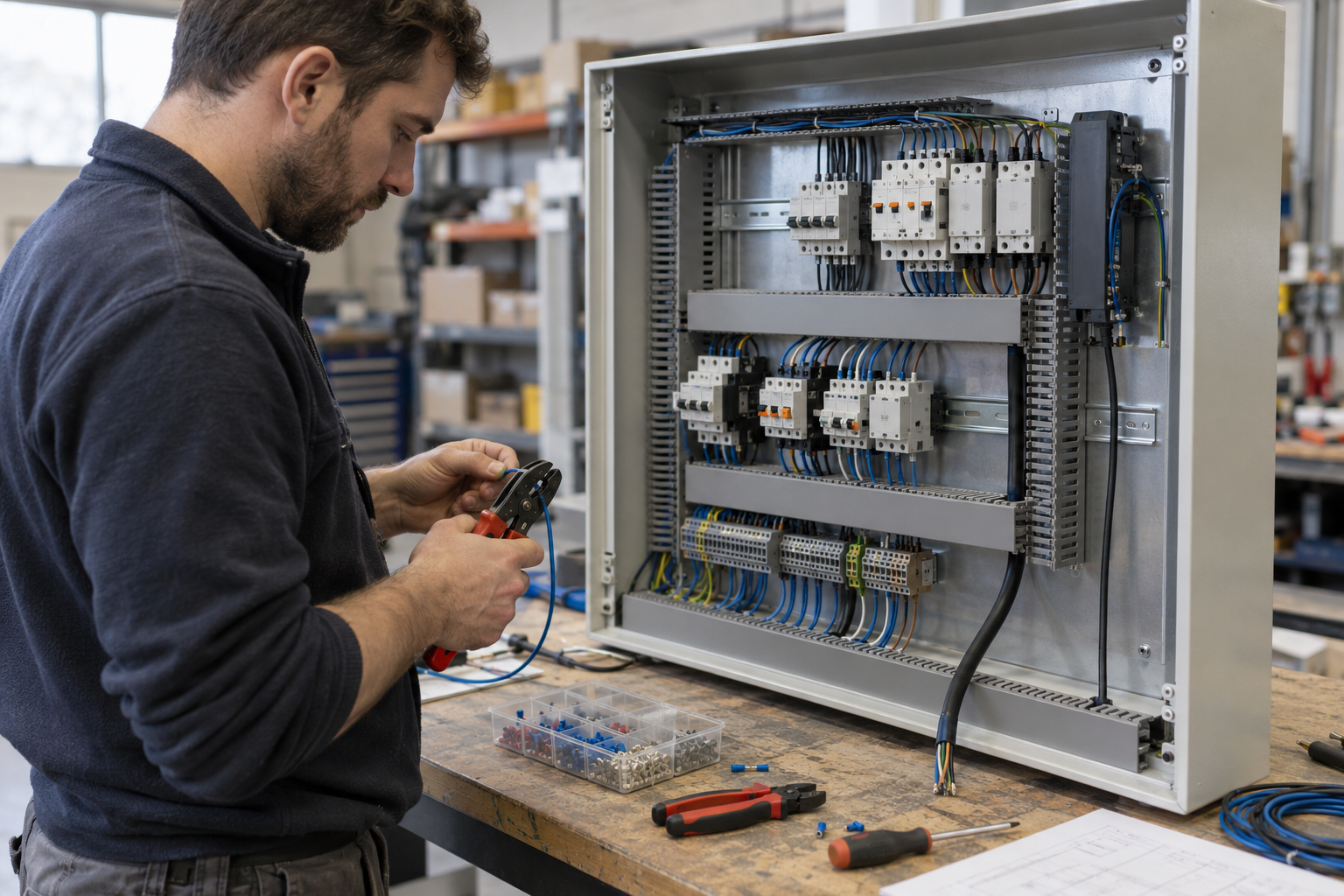
A supplier of complete electrical assemblies follows a different commercial route from a manufacturer supplying enclosures, circuit breakers, connection systems or accessories to panel builders.
Complete assemblies are commonly specified by electrical consultants, engineering teams or asset owners and purchased through contractors, integrators or project procurement teams. Components enter the panel builder’s design, production and sourcing process.
For low-voltage assemblies, the relevant IEC/EN 61439 requirements concern the completed assembly and its verification.
Using compliant components alone does not establish conformity of the finished board. The responsibilities of the original manufacturer, assembly manufacturer and specifier must be understood.
Customers may need to resolve:
- Current ratings under the intended installation conditions.
- Temperature rise, short-circuit withstand and protection arrangements.
- Internal separation, access and maintainability.
- Enclosure protection and environmental conditions.
- Cable entry, connections, space and future expansion.
- Verification evidence and delivery documentation.
IEC’s specification guidance explicitly connects assembly characteristics to the application information supplied by the specifier.
Myralbe identifies whether the opportunity concerns a complete assembly, a product platform or a component substitution. We reach the relevant design and purchasing teams and clarify the requirements for evaluation, acceptance and supply.
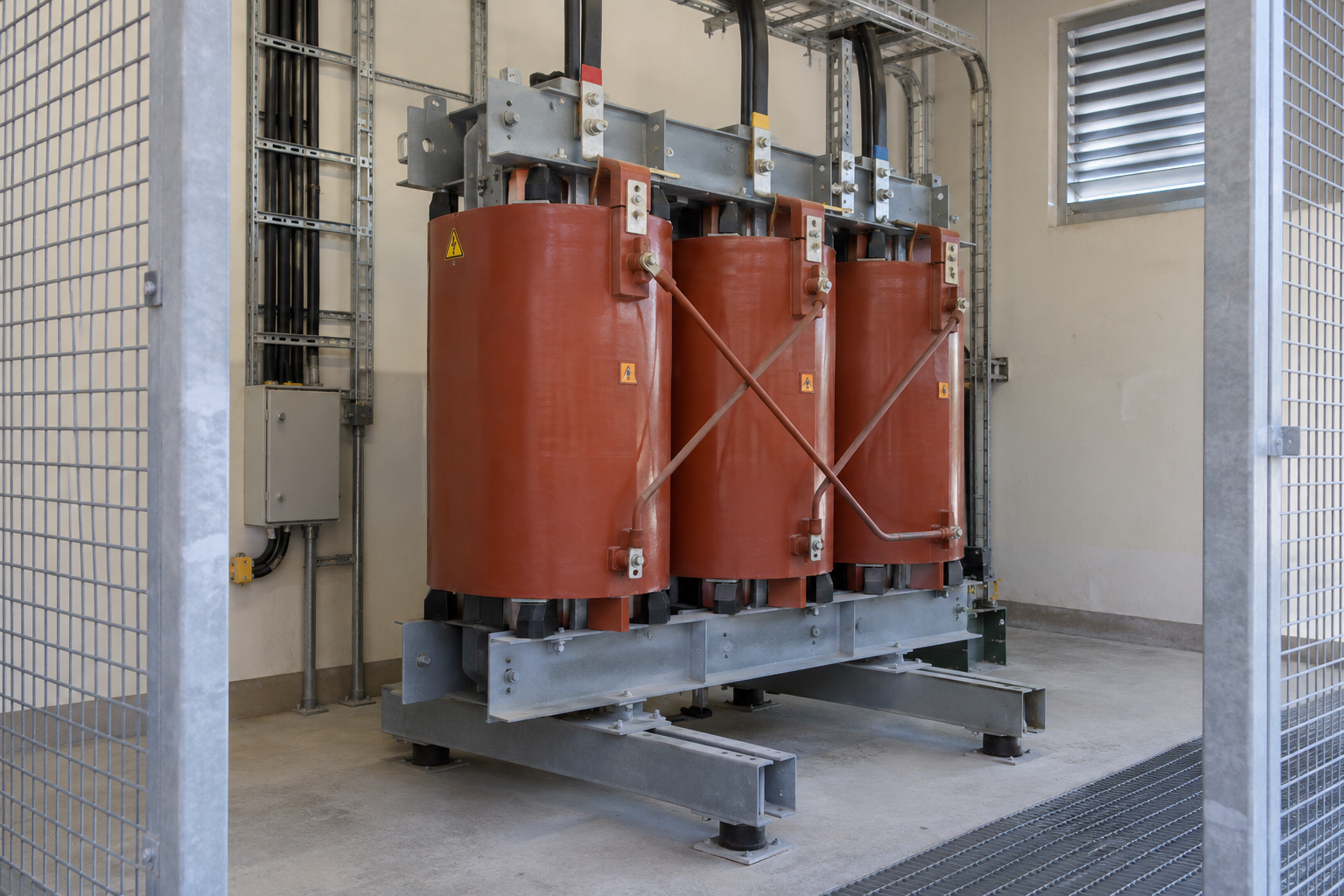
Transformer selection begins with the installation’s voltage, load and operating conditions.
Rated power is one part of the specification. Load profile, winding configuration, impedance, losses, cooling, installation environment and future expansion also shape the equipment required. Physical access and connections can determine whether a proposed replacement is practical.
The commercial route may involve engineering consultants, EPC contractors, electrical contractors, utilities or industrial owners.
Procurement discussions need to establish who defines the technical specification and who coordinates installation.
Busbar products require a further distinction: conductors and connection systems incorporated into equipment serve a different buying process from complete busbar trunking systems installed across a facility.
For installed systems, routing, supports, tap-off requirements, building interfaces and expansion arrangements belong in the specification and delivery scope.
Myralbe helps suppliers identify relevant projects and purchasing teams, collect application requirements and follow quotations against installation programmes. We also clarify which party supplies engineering information, installation support and the documentation required for acceptance.
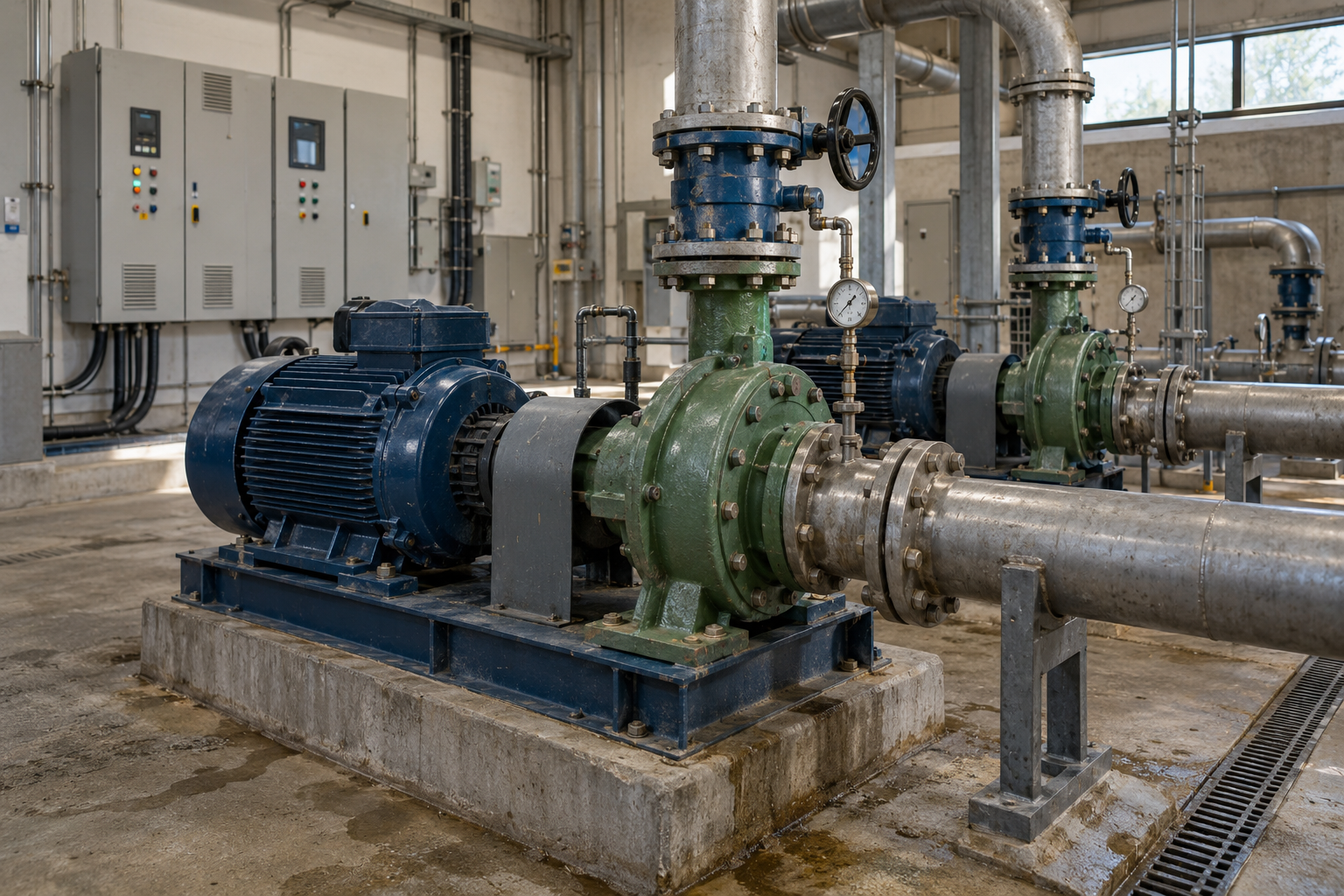
Motor-control technologies serve applications with different starting, operating and maintenance needs.
A pump, conveyor, compressor or fan has its own load characteristics and process requirements. Starting behaviour, speed control, operating duty, motor compatibility and integration with existing controls influence equipment selection.
Soft starters and variable-speed drives address different requirements.
The former manage starting and stopping in suitable applications; the latter control operating speed and torque through the drive system. Their suitability depends on the motor and application.
The route to market also changes with the customer:
- Machinery OEMs evaluate equipment for incorporation into their designs.
- Panel builders select components and configurations for motor-control assemblies.
- Automation integrators address process and control interfaces.
- Plant engineering and maintenance teams assess improvements or replacements in operating installations.
Myralbe develops those accounts around the manufacturer’s actual offer. We establish whether the requirement concerns a new machine, a plant expansion or an installed asset, and coordinate the technical information needed for a useful evaluation.
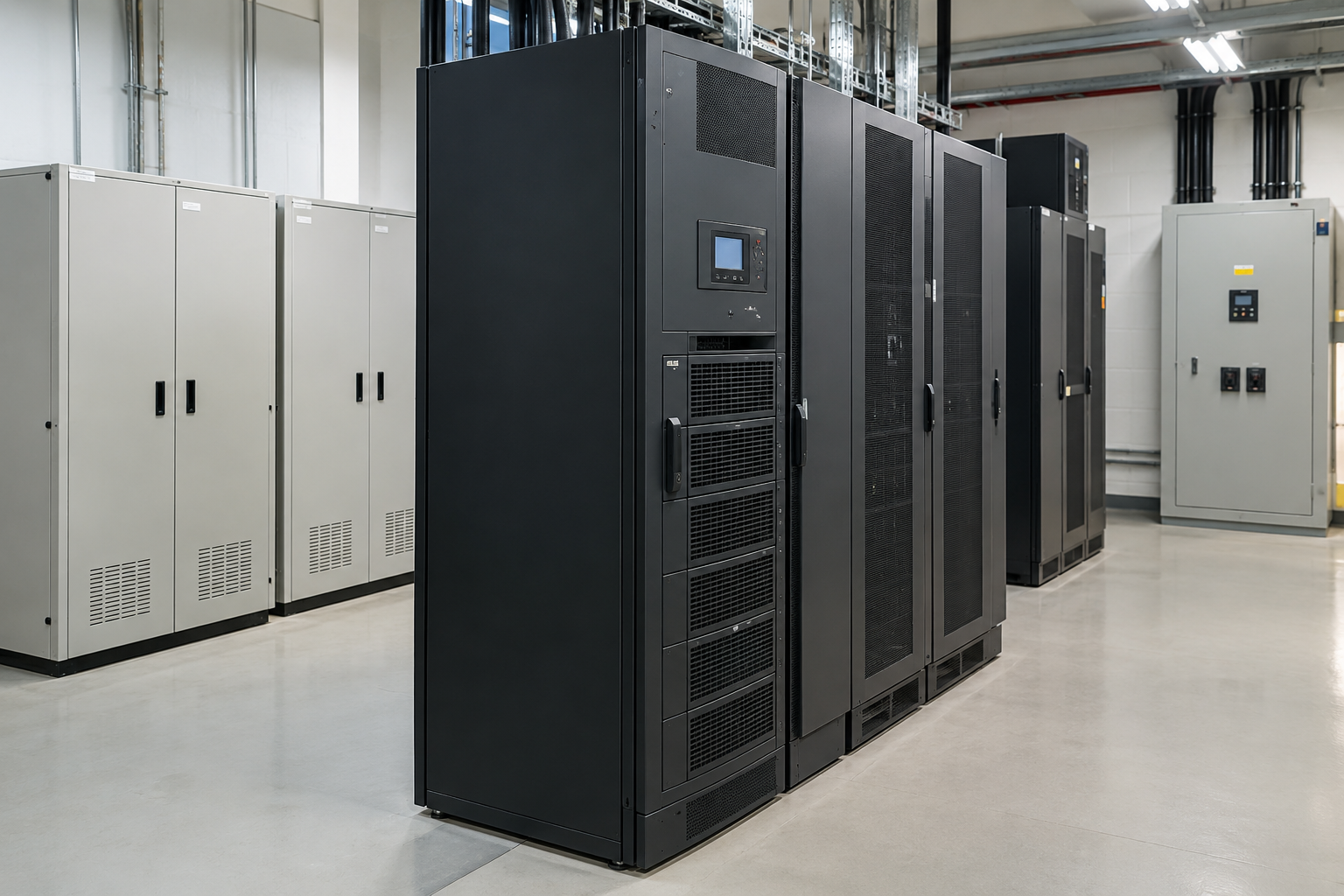
Power-continuity procurement starts with the supported load and the operating situations the customer needs to cover.
A UPS must have sufficient output capacity for its connected equipment and sufficient stored energy for the specified runtime. Adding battery capacity can extend autonomy without increasing the UPS’s output-power rating. Runtime discussions therefore need a defined reference load and appropriate battery assumptions.
Customers also need clarity on overload behaviour, battery replacement, maintenance access, bypass arrangements, monitoring and future expansion.
Redundancy requires assessment across the architecture. N+1 capacity redundancy and arrangements with independent power paths describe different configurations. Shared equipment, distribution paths and bypasses can affect what remains supported during a failure or maintenance activity.
Maintenance bypass and transfer equipment perform specific functions within that architecture. Their selection must consider the sources available and the protection the load receives in each operating state.
Myralbe approaches facility owners, specialist consultants, contractors and service partners around these requirements. We qualify the application, coordinate technical discussions and help clarify equipment supply, commissioning support, maintenance and local response.
Protection and control equipment must operate within an agreed electrical and communications architecture.
Commercial evaluation can involve protection engineers, utilities, industrial electrical teams, substation integrators and specialist contractors. Accepted equipment lists, configuration tools, technical documentation and available support may influence supplier selection.
A relay’s functions need to be considered alongside the complete protection scheme. Relevant responsibilities include protection settings, instrument-transformer interfaces, trip circuits, interlocking, communications and testing.
For substations using IEC 61850, device conformance and functional testing of the implemented system are distinct activities. The system must be assessed against the end user’s intended protection and control functions.
Myralbe identifies who specifies the equipment, who integrates it and who authorises acceptance. We document supplier-qualification requirements and coordinate discussions about configuration, interoperability, testing scope and support.
For manufacturers supplying through project partners, establishing these responsibilities early helps define a workable commercial offer.
Power-quality opportunities often begin with an observed operating problem: unexplained trips, overheating, disturbed equipment behaviour or concerns about the electrical supply.
Harmonic distortion, reactive-power demand, voltage disturbances and interruption are different phenomena. They require appropriate measurement and diagnosis before a correction technology is selected. Harmonics can affect connected equipment and contribute to operational disruption.
Power-factor correction and harmonic mitigation also need to be considered together where relevant. Capacitor banks can interact with system harmonics, creating resonance risks that influence the appropriate technical solution.
Monitoring technologies have a related commercial challenge: customers need information that supports a decision. The required measurements, recording capability, alarms, data access and integration with existing systems should follow the operational objective.
Myralbe helps suppliers reach plant electrical teams, facility operators, integrators and specialist service companies. We establish the reported problem, available evidence and evaluation process, then coordinate the manufacturer’s technical involvement.
Baseline measurements and agreed acceptance criteria give an evaluation a clear purpose.
Data-centre electrical procurement connects power availability, distribution, maintainability and staged capacity growth.
Relevant technologies include medium- and low-voltage distribution, transformers, UPS systems, transfer equipment, busbar distribution, rack power distribution and electrical monitoring.
Equipment must fit the facility’s specified power architecture. Redundancy needs to be examined through the supply paths to the supported loads and through the operating states required for maintenance. A redundancy label alone cannot establish the performance of the whole installation.
Manufacturers may need to engage owners’ technical teams, electrical and building-services consultants, design-and-build contractors, specialist integrators and operators.
Commercial qualification should establish whether the project concerns a new facility, phased expansion, equipment replacement or operational improvement. It should also identify the requirements for supplier approval, testing, handover and ongoing service.
Myralbe develops the account strategy around those roles and the manufacturer’s specific product scope, helping it enter the relevant evaluation and procurement process.
Protective equipment needs to clear faults within the installation’s requirements.
Continuity also depends on how protective devices coordinate.
Selectivity aims to isolate the affected circuit while maintaining supply to other parts of the installation. Breaking capacity and selectivity consequently answer different technical questions.
For a manufacturer proposing an alternative device, the commercial discussion should identify the required coordination evidence, existing equipment and the engineer responsible for validating the proposal.
Replacement and retrofit projects may involve incomplete drawings, restricted access, limited space and equipment that must remain in service.
Qualification should establish who surveys the installation, which interfaces require confirmation and what shutdown window is available. Temporary supply, installation sequencing and return-to-service testing may form part of the project.
These details affect both the scope and timing of procurement. Myralbe records the unresolved requirements and coordinates their clarification with the responsible technical parties.
Some buyers purchase through approved suppliers, framework agreements or established product configurations.
A manufacturer may therefore need to complete an evaluation before it can quote effectively for individual projects. That process can involve documentation, samples, technical review, commercial terms and support arrangements.
Myralbe identifies the acceptance process, the people managing it and the work required to progress. We distinguish supplier-development opportunities from immediate purchasing requirements so that activity follows the buyer’s actual timetable.
Customers need equipment when the site is ready to receive, install and test it.
Commercial discussions should address manufacturing lead time, delivery sequencing, site access, storage requirements and the availability of technical support. A delayed item can affect the programme even when other equipment is already available.
Long-term support also belongs in supplier evaluation: spare parts, replacement compatibility, documentation, software tools and local response can influence the purchasing decision.
Myralbe helps clarify these commitments and follows outstanding issues through proposal and procurement discussions.
European market entry requires the applicable conformity assessment, technical documentation, declarations and marking to be addressed for the product concerned.
The Low Voltage Directive establishes requirements for electrical equipment within its scope.
The project also has installation and application requirements that must be established with the responsible designers, installers and operators.
Myralbe helps identify the documentation requested by customers and coordinate responses. Technical design, conformity assessment, protection settings and commissioning remain with the manufacturer and appropriately qualified parties.
Applicable European ecodesign rules set energy-efficiency requirements for power transformers within their scope.
Procurement discussions should establish the required losses, operating assumptions and supporting documentation alongside price, installation constraints and delivery.
This allows the manufacturer’s offer to be assessed against the customer’s intended use and lifecycle criteria.
The EU F-gas framework introduces restrictions affecting electrical switchgear using fluorinated gases.
Equipment category, voltage, planned commissioning date and applicable exceptions can influence selection.
For suppliers, this creates a need to discuss technology choices and project timing early. Customers evaluating new installations or replacements need a clear explanation of the proposed equipment and its applicable regulatory position.
Myralbe brings these questions into commercial qualification and coordinates the manufacturer’s supporting information.
We then establish the appropriate route: specification with engineering firms, incorporation by panel builders or OEMs, project supply through contractors, direct sales to operators or development through technical distributors.
The account strategy connects those roles. It also establishes when specifications are being developed, whether alternatives can be considered and what supplier-approval process applies.
Depending on the product, this includes:
- Facility, application and reason for investment.
- New installation, expansion, replacement or retrofit.
- Buyer, specifier, integrator and purchasing route.
- Indicative scope and technical decision criteria.
- Existing equipment and compatibility questions.
- Required documentation and supplier approvals.
- Installation programme and available shutdown windows.
- Delivery, testing and support responsibilities.
- Next decision, responsible person and agreed action.
We prepare technical meetings, track unanswered questions and coordinate the manufacturer’s specialists with the customer’s relevant teams.
Technical capability, customer coverage, stock requirements, margins, responsibilities and existing supplier relationships shape that assessment.
This includes tracking scope changes, exclusions, delivery commitments, payment terms, warranty conditions and support arrangements.
Activity and next actions can be recorded in the manufacturer’s CRM or an agreed shared system, giving its team a clear account of each opportunity and the work still required.
Spanish-language development across relevant panel builders, engineering firms, contractors, industrial owners and infrastructure operators.
Portuguese-language commercial execution shaped around the product’s local specification, purchasing and implementation chain.
French-language account and opportunity development with the organisations evaluating, purchasing and operating the relevant electrical technologies.
Additional mandates can be structured around the product, customer base and commercial resources required.
Your next step may be inclusion in a specification, qualification with a panel builder, access to infrastructure projects, development of a local partner or stronger follow-up on existing quotations.
Tell us what you manufacture, which applications you serve and where the purchasing process is getting stuck. We can assess the accounts, requirements and commercial work that would make a mandate useful.