Market development · Spain
Market development in Spain
Direct commercial execution from our operational base in Spain, for manufacturers of industrial equipment, components and technology.
Myralbe identifies relevant customers and partners, develops accounts in Spanish and follows opportunities through requirements review, technical discussions, quotations and purchasing decisions.
The work starts with your product, its applications and the commercial position you want to develop: direct customers, OEM supply, integration partners, distribution or a combination of those routes.
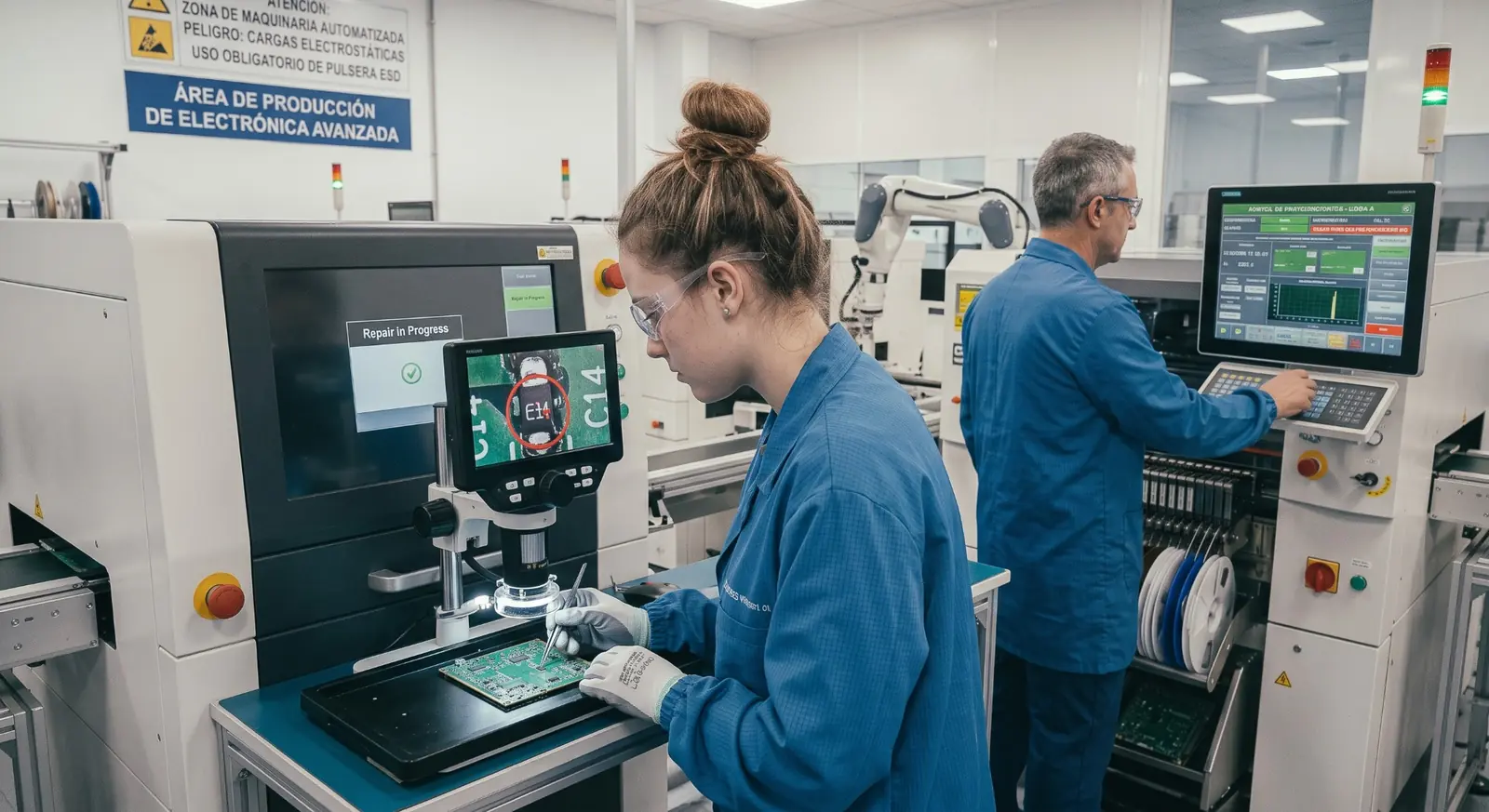
Advanced electronics production relevant to technical market development in Spain
Market perspective
A Spanish market strategy needs to establish three things: where the product has a credible application, which organisations influence its selection and how a purchase can be made.
Those answers change with the technology.
An automation manufacturer may need to engage a production plant and the integrator responsible for its line. A component supplier may need engineering approval before purchasing can evaluate series supply. An electrical-equipment manufacturer may enter through a consultant’s specification, an EPC package or a specialist contractor.
We establish that structure before developing the account list.
Geography follows the application. We record where the organisation is based, where the equipment will be installed and where the purchasing decision is made. These locations can be different.
Regional focus
Spain’s regional ecosystems provide useful starting points for account selection. The commercial work then establishes which individual companies have the application, purchasing responsibility and requirements relevant to your product.
Regional concentration helps prioritise research and visits. Account selection still requires a specific reason why the company could use, incorporate, specify or supply the manufacturer’s technology.
Routes to market
For equipment sold to a plant, warehouse or operating facility, we identify the requirement and the people responsible for investment, engineering, operations, maintenance and purchasing.
We establish whether the customer buys the equipment directly or expects an integrator or contractor to deliver the wider solution.
Qualification includes the existing operation, required improvement, installation conditions, service expectations and the process for approving expenditure.
For components and subsystems, we identify the machine family or product in which the solution could be incorporated.
Engagement follows the customer’s engineering, quality and purchasing responsibilities. We establish requirements for documentation, samples, testing, supplier assessment and production supply.
Published supplier procedures illustrate these separate stages. CAF, for example, provides distinct arrangements for supplier registration, assessment, sourcing and ongoing supplier transactions.
We track the stage reached and the decision needed next.
For technologies supplied within a wider project, we establish who defines the requirement, who specifies the product, who purchases it and who integrates or installs it.
The commercial route may involve an engineering consultant, system integrator, EPC contractor, panel builder or specialist installer.
We qualify the relevant supply package, project stage, technical interfaces and responsibility for commissioning and support. Engagement is directed towards the organisations that can influence the manufacturer’s actual scope.
A local channel needs a defined role.
We assess whether a prospective partner can reach the target customers, explain the application, handle enquiries and provide the support the product requires.
Depending on the technology, that assessment may include technical sales resources, stock capacity, workshop facilities, installation capability, training needs and after-sales arrangements.
Commercial discussions address territory, existing product relationships, margins, responsibilities and how opportunities will be developed together.
For applications involving public authorities or publicly procured projects, we examine the published requirement and contracting structure.
Spain’s Public Sector Procurement Platform and contracting profiles provide access to notices, specifications and award information.
We establish whether the relevant route is a direct equipment tender, a specialist supply package or engagement with a contractor pursuing or delivering a wider project.
The assessment follows the actual technical scope, purchasing procedure and timetable.
Myralbe in Spain
We translate the manufacturer’s offer into target applications and account-selection criteria.
The initial work establishes:
- The products and supply scope to be developed.
- The operating requirements they address.
- Relevant customer and partner categories.
- Regional concentrations of suitable accounts.
- Existing customers, distributors and protected relationships.
- The technical and service resources available to support sales.
The result is a prioritised account structure with a reason for approaching each organisation.
We conduct outreach and follow-up in Spanish, using the application to give the conversation a clear purpose.
Initial discussions establish the account’s activity, relevant equipment or projects, decision-making roles and willingness to evaluate the manufacturer’s offer.
We identify the appropriate technical and commercial contacts and coordinate further discussions with the manufacturer when application expertise is required.
Account records distinguish information confirmed by the customer from assumptions that still need investigation.
We map the organisations and functions involved in the decision, then establish their requirements.
For an industrial customer, this may involve engineering, production, maintenance and purchasing. For an infrastructure project, it may involve the owner, consultant, contractor and equipment integrator.
Large buyers can also have formal supplier-qualification and purchasing stages. Endesa’s published process separates purchase planning, supplier qualification, purchase requests, tendering, contract formalisation and performance review.
We clarify which stages apply to the account and coordinate the information required from the manufacturer.
Each meeting has a defined commercial purpose: understanding an application, reviewing a project, evaluating a partner or resolving questions affecting a proposal.
Preparation includes an account brief, the relevant participants, known requirements and the points to clarify.
Site visits are organised where the physical operation matters to qualification and access can be agreed. The manufacturer’s technical specialists participate when the application requires their assessment.
Trade-fair activity follows the same discipline: relevant accounts, prepared discussions and documented follow-up.
Afterwards, we record the findings, outstanding questions, responsible people and next actions.
We remain involved as the customer’s requirement becomes more defined.
Follow-up may concern drawings, operating data, technical documentation, sample requests, demonstrations, quotation revisions or a discussion with an integration partner.
Before a proposal progresses, we clarify the supply boundary and the assumptions affecting price and delivery.
We then follow the customer’s response: what has been accepted, which objections remain, who must review the proposal and what is needed for the purchasing decision.
Opportunity qualification
What does the customer need to improve, replace, develop or purchase?
We document the application and the reason for considering action, including the existing solution and the limitation or requirement reported by the account.
Where does the manufacturer’s product fit, and which conditions affect that fit?
We establish the information needed for the manufacturer to evaluate the application, including relevant performance requirements, interfaces and operating conditions.
Who influences the specification, who approves the investment and who places the order?
We identify the relevant responsibilities at site, company or group level, together with any contractor or partner involved.
Is the account exploring options, developing a design, seeking quotations, conducting trials or preparing procurement?
For grid-connected storage projects, qualification includes the access and connection stage. Red Eléctrica’s guidance identifies access viability and the physical technical connection solution as distinct assessment matters.
We also establish the owner, appointed project parties and purchasing timetable relevant to the manufacturer’s scope.
What supply arrangements does the customer require, and can the manufacturer support them?
We qualify quantities or project scope, delivery expectations, pricing assumptions, installation or service needs and payment conditions when these become relevant.
What should happen next, who is responsible and when should it happen?
The next step may be a technical discussion, a document exchange, a site visit, a sample evaluation, a quotation or a purchasing review.
Opportunity status follows the evidence available and the stage actually reached.
Working with the manufacturer
Effective local execution requires clear coordination with the manufacturer’s team.
At the start of the mandate, we establish the products in scope, target applications, existing Spanish relationships, commercial priorities and responsibilities for responding to enquiries.
We also clarify who provides application assessment, technical documentation, quotations, delivery information and after-sales support.
As accounts develop, Myralbe brings the customer’s requirements and objections back to the manufacturer, coordinates the response and follows the outstanding actions with the customer.
This keeps commercial activity connected to what the manufacturer can supply and support.
Reporting and accountability
Reporting is organised through the manufacturer’s CRM or an agreed working format.
The mandate can include:
- A prioritised account list: application relevance, location, account type and reason for inclusion.
- A stakeholder map: engineering, purchasing, operations, quality and partner responsibilities.
- An activity record: approaches made, conversations completed and responses received.
- Qualified opportunity records: requirements, purchasing route, project stage and outstanding questions.
- Proposal follow-up: quotation status, objections, required revisions and next decisions.
- Market feedback: recurring requirements, reasons for rejection, channel needs and implications for positioning.
- An action plan: next steps, responsible people and agreed dates.
Activity measures show the work completed. Opportunity records show what has been learned, what has progressed and what still prevents a decision.
Mandate scope
A Spain mandate can focus on:
- Developing direct customers for a specific technology.
- Identifying and evaluating distribution or service partners.
- Building relationships with machinery manufacturers and OEMs.
- Developing engineering, integrator or contractor accounts.
- Progressing existing enquiries and proposals.
- Expanding from an established customer base into additional applications or regions.
The scope defines the target accounts, responsibilities, field activity and reporting arrangements.
It can begin with one application or a selected group of accounts and expand as customer evidence supports the next step.
Bring your products, target applications and commercial priorities.
Together, we define the relevant accounts, the route to purchase and the local work needed to develop the opportunity.