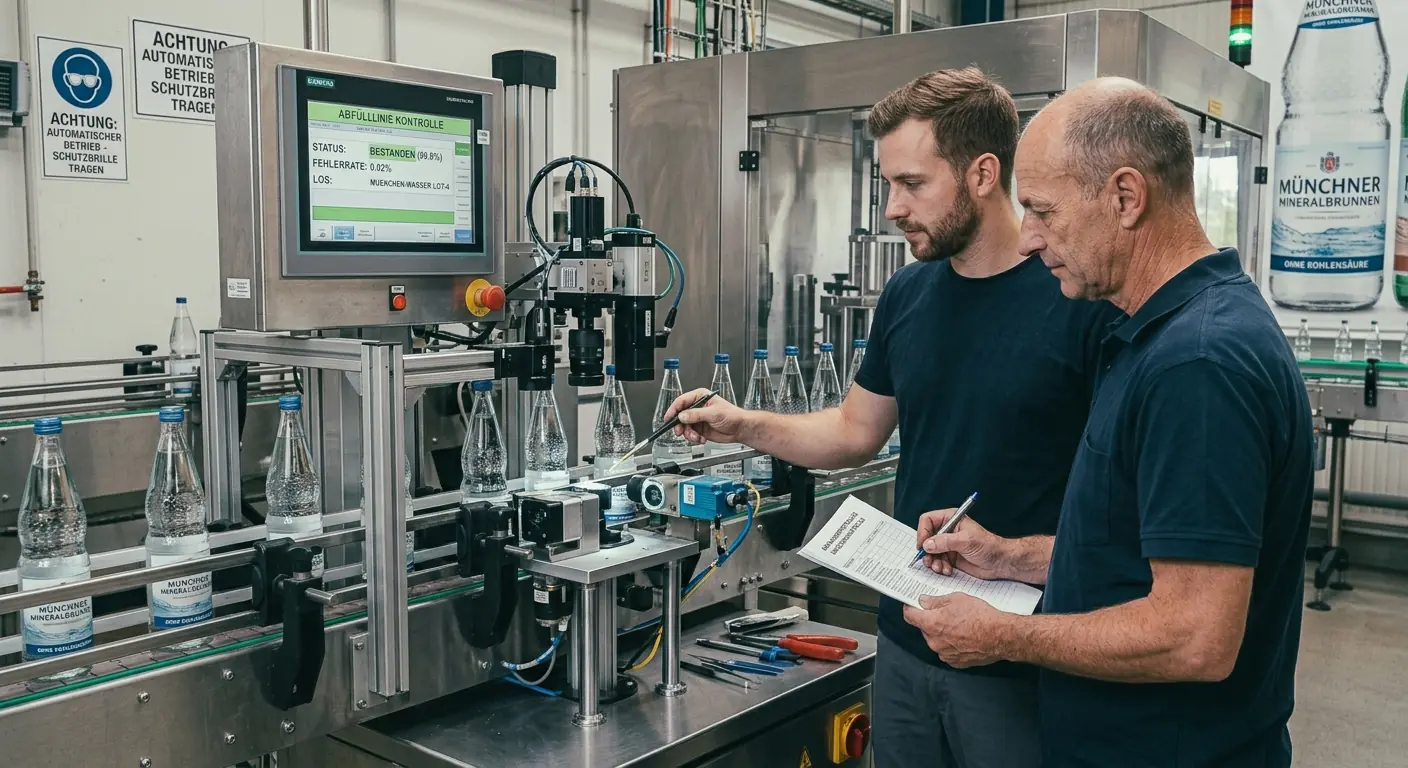
Illustrative scenario adapted from an ongoing market-development project. The sector and identifying details have been changed; no results are attributed to the company described.
Consider a manufacturer of industrial water-treatment equipment preparing to develop another European market with a local commercial partner. Before the partner begins calling, there is a practical question: which companies should they approach, and why?
The project behind this example had reached that preparation stage. Our work had produced mapped accounts, structured research records, reviewed qualification criteria and an initial selection for partner review. Product training and the first outreach activity were still ahead.
The operation matters more than the sector label
A directory might identify a large food factory, a processing plant or another industrial site. That makes the company a research candidate. It does not establish that the site needs the equipment on offer.
Two businesses in the same sector can have different processes, equipment and priorities. To prepare a useful approach, we would need to understand where the manufacturer’s solution might have a role, what the available information supports and what still needs checking.
In the underlying project, we reviewed these selection criteria with the manufacturer. One point changed how we assessed accounts: the presence of existing equipment was not enough to rule a company out. It might serve a different operation.
Applied to this example, finding a reference to a treatment system would prompt further questions about its role. It would not, by itself, prove that the account was unsuitable. Technical judgement would remain with the manufacturer.
Make the research usable for the person calling
The research records in the original assignment brought together the reason for considering each company, supporting sources, relevant contacts or decision-making roles, and questions still to resolve.
For the water-treatment example, the same structure would give a commercial partner a starting point for a conversation. Why does this site appear relevant? Who is likely to understand the operation? What do we need to find out before involving a technical specialist?
A research hypothesis must stay visibly separate from a confirmed buyer need. Public information may suggest an application. It cannot establish that a company has a problem, wants to change equipment or intends to invest.
That distinction also makes it easier to correct the record. If the first conversation disproves an assumption, the team should be able to see what changed and adjust the next step.
Give the local partner room to challenge the shortlist
The initial account selection was prepared for the partner to review. Their knowledge could change the priorities: an account might already be known, have an existing relationship or be unsuitable for a reason that public research would miss.
A partner needs to be able to accept, reject or replace proposed accounts. That review helps decide where to begin and who should make contact. It also reduces the risk of two people approaching the same company without knowing what the other has said.
Myralbe’s contribution is to bring researched options and a clear rationale to that discussion. The partner adds local knowledge. Both are needed to prepare a sensible first approach.
Agree who owns the next step
In the project behind this example, the manufacturer remained responsible for product training and technical suitability. Myralbe’s responsibilities covered research, contact preparation, preparing qualification criteria and questions, and setting up shared follow-up records. The partner’s role and account priorities were coordinated before outreach.
For a water-treatment assignment, we would agree equally clear boundaries. Commercial development can identify questions, collect context and organise a technical conversation. It cannot substitute for the manufacturer’s assessment of a site or application.
The next stage would be training and a first round of outreach, followed by a review of what buyers actually said. At the preparation stage, there are no sales results or confirmed demand to report. What the client receives is a researched starting point, a record of open questions and a coordinated plan for using both.
If you are developing a market for water-treatment or industrial process equipment, our market-development work can help prepare that first commercial activity. Talk to us about your equipment, existing partners and the accounts you want to reach.