Factories · Warehouses · Material flow
Automation & Intralogistics
Commercial development for manufacturers of industrial automation, robotics and material-flow technologies.
Myralbe helps manufacturers develop business in Spain, Portugal and France by identifying suitable applications, reaching operational and technical decision-makers and working through evaluation, proposals and purchasing decisions.
We build the commercial approach around the operation:
what moves, where it moves, what interrupts the flow and what the customer needs to achieve. A robot, conveyor, storage system or software platform must fit those requirements and the wider process.
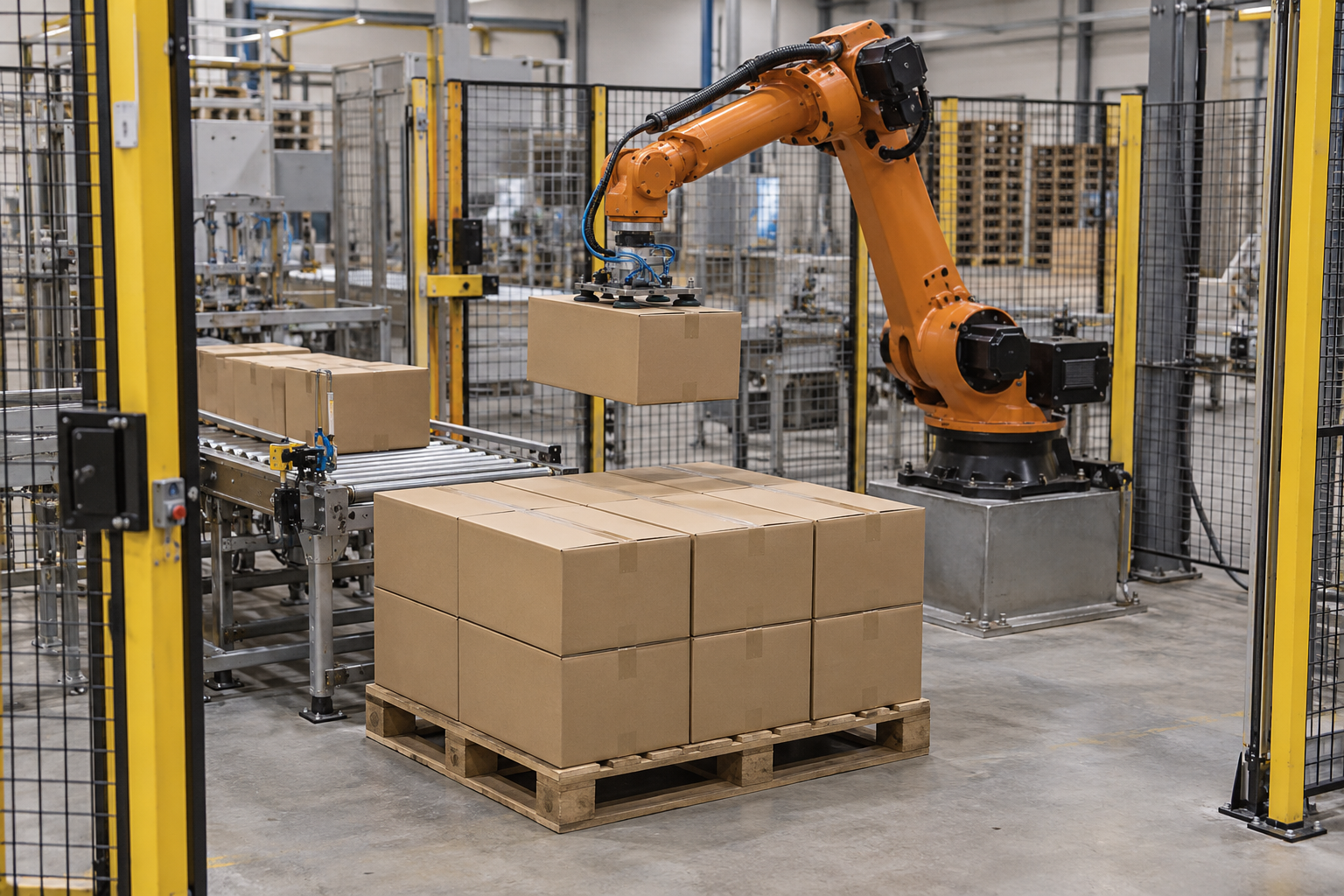
Industrial automation performs and coordinates production tasks.
Intralogistics manages the movement, storage and preparation of materials within factories, warehouses and distribution centres.
The two meet wherever production depends on material availability: supplying a machine, moving work in progress, buffering finished goods or preparing orders for dispatch.
Performance depends on the connected process. Storage, conveyors, workstations and software must coordinate their capacity and task priorities. An improvement in one section can expose a constraint elsewhere.
For manufacturers, the commercial starting point is therefore an operational requirement: sustained output, shorter queues, more reliable replenishment, accurate order preparation, better use of space or reduced manual handling.
The relevant customer may be an operator investing in a facility, an integrator designing the solution or an equipment manufacturer incorporating the technology into its own system.
Qualification starts with the required supply rhythm, transport missions, load carriers and handover points. The objective is to connect material availability to the production process.
These are different constraints. The proposed technology needs to address the relevant combination of storage capacity, movement capacity and processing capacity.
The commercial discussion must establish the order profile, peak workload, replenishment requirements and downstream packing and dispatch arrangements.
Evaluation needs to consider product variation, operator interaction, changeovers and the conditions under which the task is performed. The resulting application must be practical to operate and maintain.
Robot selection begins with the task: machine tending, assembly, handling, inspection or another defined production operation.
Payload and reach are initial selection criteria. The complete application also depends on tooling, part presentation, process variation, positioning requirements and the cycle that must be sustained.
Customers need to understand how the robot receives the product, performs the operation and releases it to the next stage.
Changeovers, rejected parts and recovery after an interruption belong in that discussion.
Collaborative applications require assessment of the complete installation.
The tool, workpiece, movement, nearby equipment and operator interaction influence the required protective measures. Built-in robot safety functions support this assessment; application safety remains a responsibility of the integration process.
The buying route may involve manufacturing engineering, production management, machinery OEMs or robot integrators.
Myralbe identifies the application owner and the organisations responsible for integration. We coordinate the operational information, representative samples and technical discussions needed to assess whether the manufacturer’s offer fits the task.
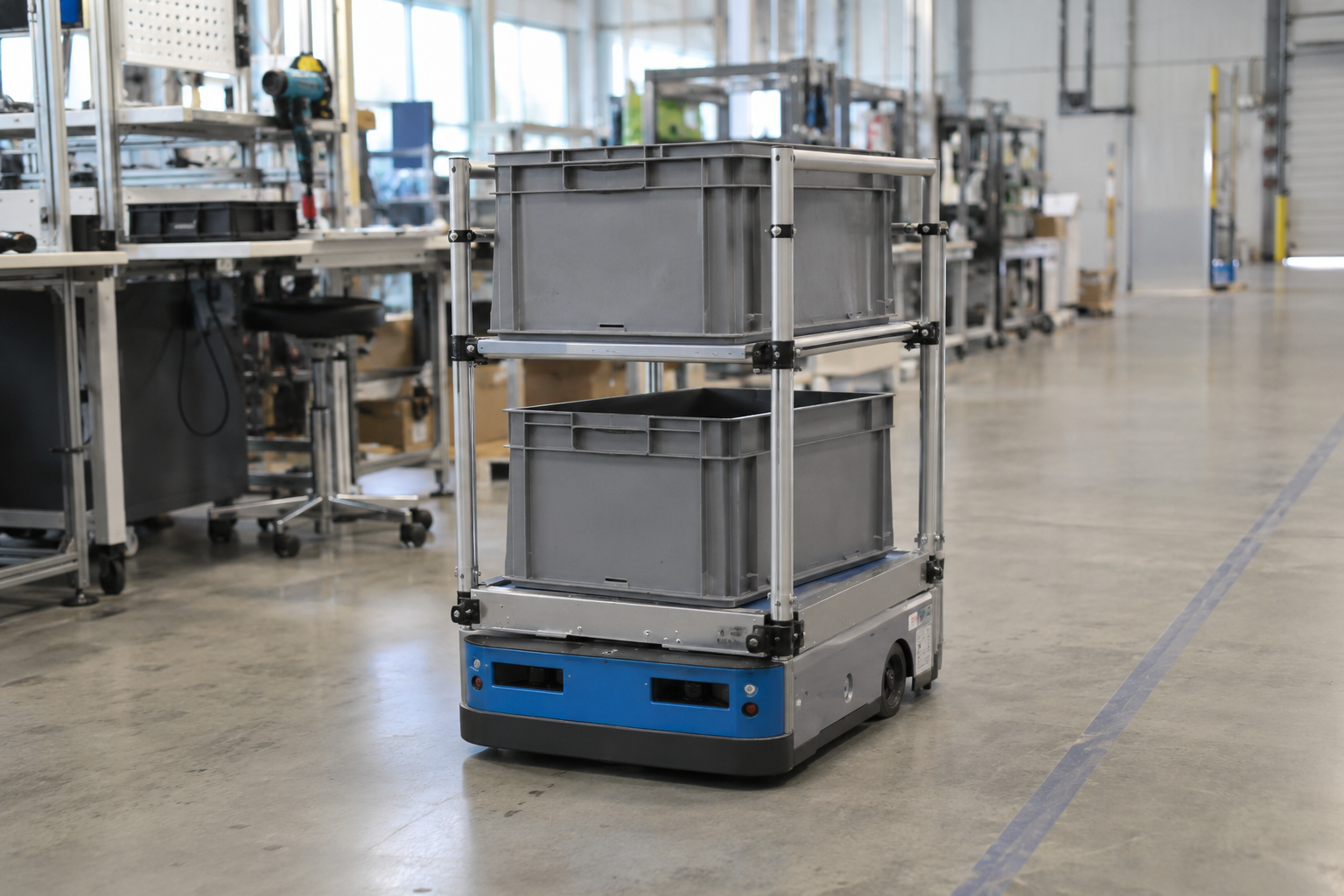
Automated guided vehicles and autonomous mobile robots serve transport missions within an operating environment.
Commercial qualification starts with the load and journey: pallets, containers, carts or other carriers; pickup and delivery points; frequency; distance; and the conditions for transferring the load.
Fleet capacity depends on achievable travel speed, docking and transfer time, charging, traffic rules and the distribution of demand across the shift.
Narrow aisles, congestion and waiting at doors or intersections can change the number of vehicles required.
Customers also need to resolve floor conditions, carrier consistency, communication coverage, mixed traffic and recovery when a mission cannot be completed.
Myralbe approaches plant logistics teams, warehouse operators, integrators and suitable implementation partners around those requirements.
We help establish the transport baseline, intended mission profile and evaluation scope, then coordinate the manufacturer’s technical assessment. Discussions focus on completed useful missions under the customer’s operating conditions.
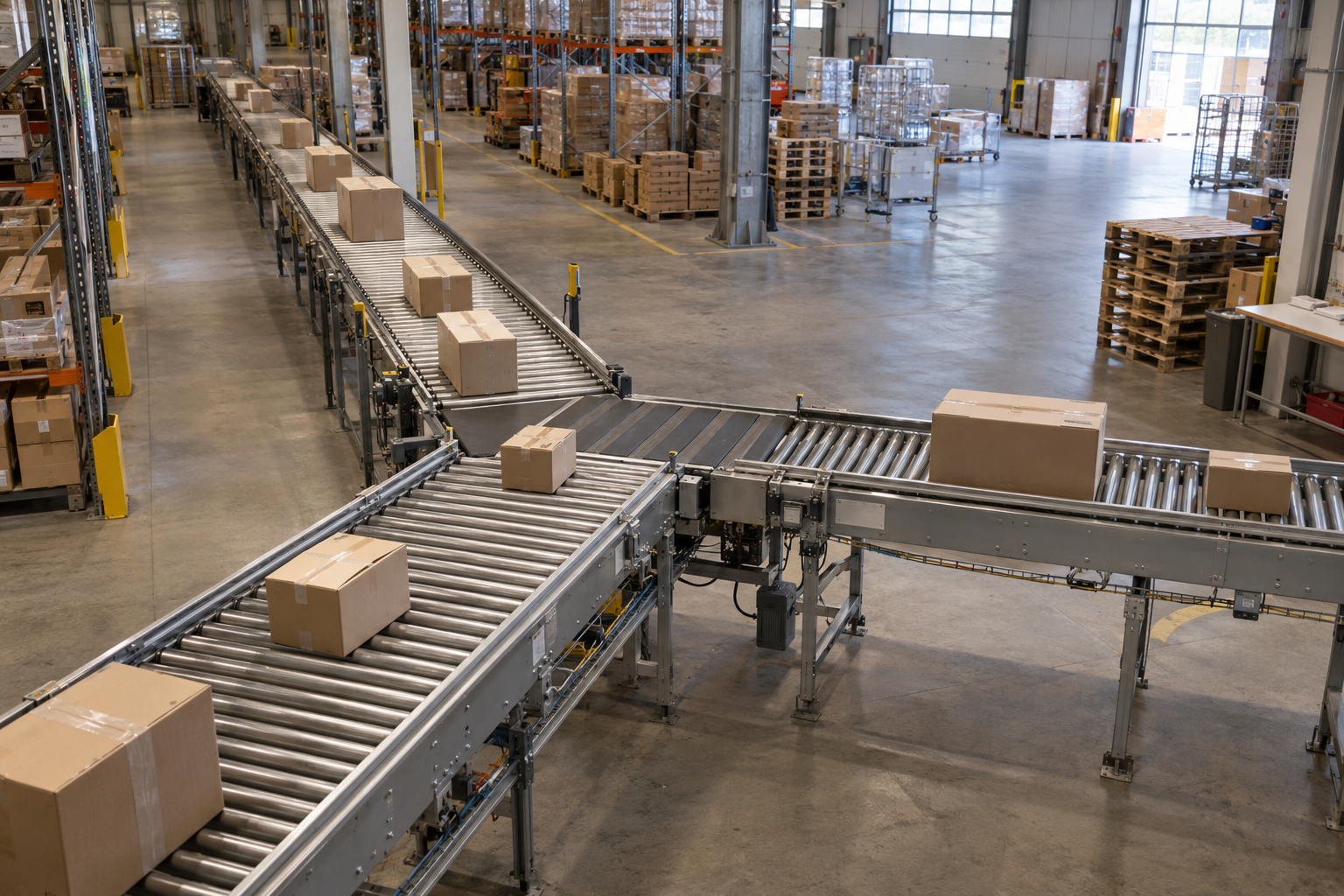
Conveyor and handling equipment must accommodate the products being moved and the flow required between operations.
Product dimensions, weight, base condition, stability and orientation influence selection. Conveyor width, accumulation behaviour and required throughput also shape the configuration.
Project discussions need to address transfers, merges, buffers, routing and the capacity of receiving equipment.
Maintenance access and handling exceptions can affect the proposed layout and scope.
The purchasing route differs by offer. Rollers, drives, sensors and modules may be selected by equipment builders or integrators. Complete handling systems commonly follow a facility project involving operations, engineering and project procurement.
Myralbe develops accounts around the manufacturer’s position in that chain. We identify whether the opportunity concerns incorporation into an equipment platform, a new project or improvement of an installed system.
This establishes the relevant technical contacts, qualification process and potential for repeat supply.
Automated storage technologies address different combinations of load format, storage density, access frequency and movement requirements.
Pallet storage, tote and bin systems, shuttles and goods-to-person installations need to be evaluated against the inventory and order profile they will serve.
Storage capacity and operational throughput are separate requirements. The number of locations available must be considered alongside the rate at which goods can enter, leave and reach the next operation. Workstation configuration and operator interaction can materially affect output.
Qualification should establish SKU characteristics, stock levels, retrieval patterns, replenishment, peak demand and the handling of goods outside the proposed system’s limits.
Building dimensions, load carriers and interfaces with surrounding equipment also require technical review.
Myralbe reaches operations, supply-chain engineering, facility owners and relevant integrators. We coordinate the information needed for initial assessment and follow the opportunity through solution evaluation, investment approval and procurement.
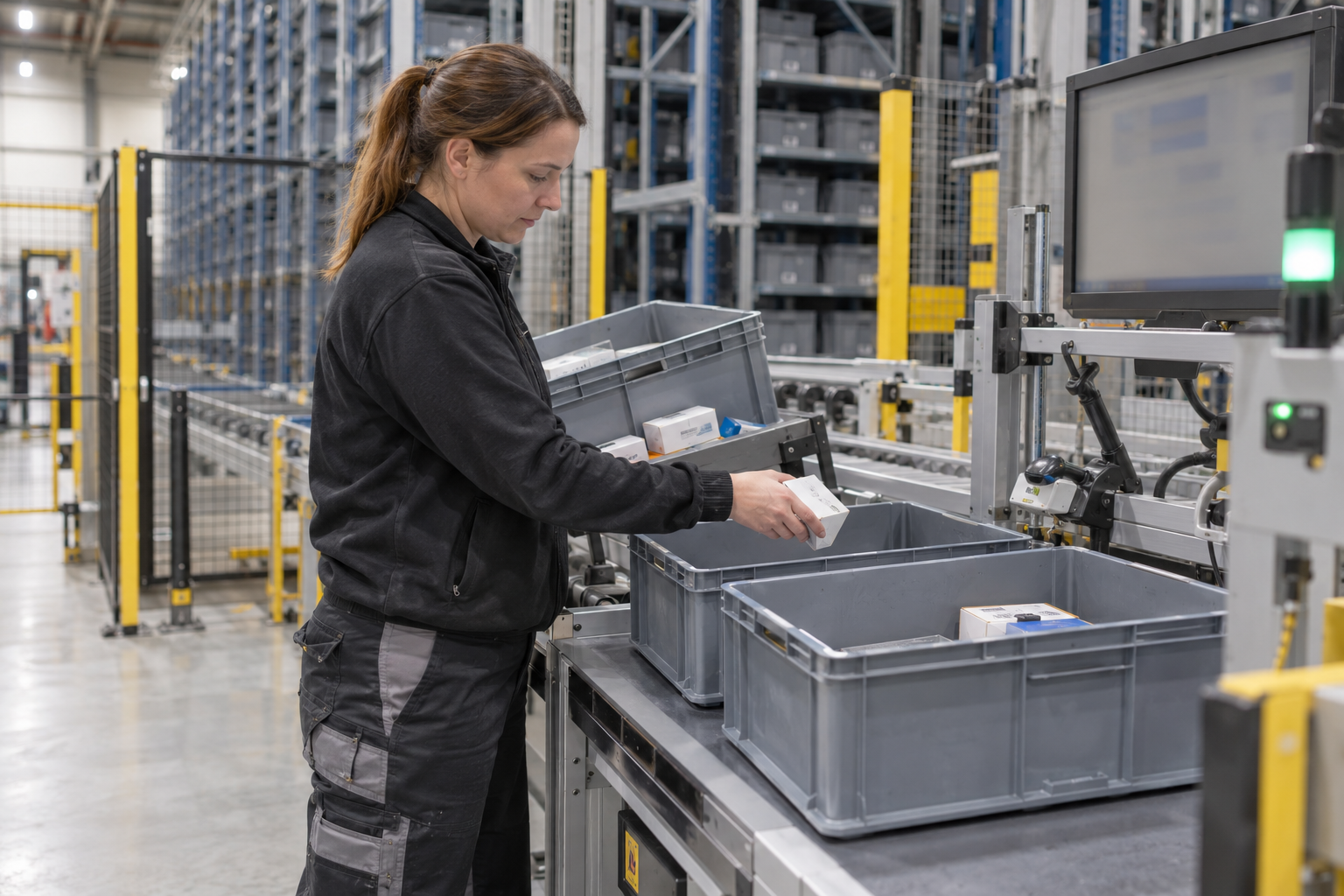
Order-preparation technologies need to match how customers receive and fulfil demand.
The same daily order volume can produce different requirements depending on items per order, product dimensions, SKU distribution, dispatch cutoffs and the concentration of work during peak periods.
Picking performance also depends on replenishment, product availability and the work required to consolidate, check and pack orders.
In goods-to-person systems, bin presentations and completed order lines measure different activities.
Commercial qualification should define:
- The unit being measured: items, lines, orders, cartons or pallets.
- The normal and peak order profiles.
- Accuracy requirements and confirmation methods.
- Replenishment and returns processes.
- Exceptions requiring manual handling.
- Interfaces with packing, staging and dispatch.
Myralbe helps manufacturers engage warehouse operations, logistics engineering and investment teams around these requirements.
For system suppliers, we identify the project and decision process. For component and subsystem suppliers, we also develop the integrators and equipment builders through which adoption may occur.
Software coordinates inventory, orders, resources and physical equipment.
A useful functional distinction is:
- WMS: inventory and warehouse workflow management.
- WES: sequencing and coordination of work and resources.
- WCS: equipment-level control and commands.
Commercial products can combine functions, so the actual scope and responsibilities need to be established for each architecture.
Customers need clarity on which system maintains inventory records, releases tasks, receives completion messages and manages exceptions. Interfaces with ERP, production systems and automation equipment must have agreed ownership.
Procurement should also address master data, testing, migration, access permissions, remote support and recovery after communication or system interruptions.
Myralbe brings operations, IT and relevant equipment suppliers into the commercial discussion. We document the required functions and integration questions, coordinate technical review and clarify licensing, implementation and support scope.
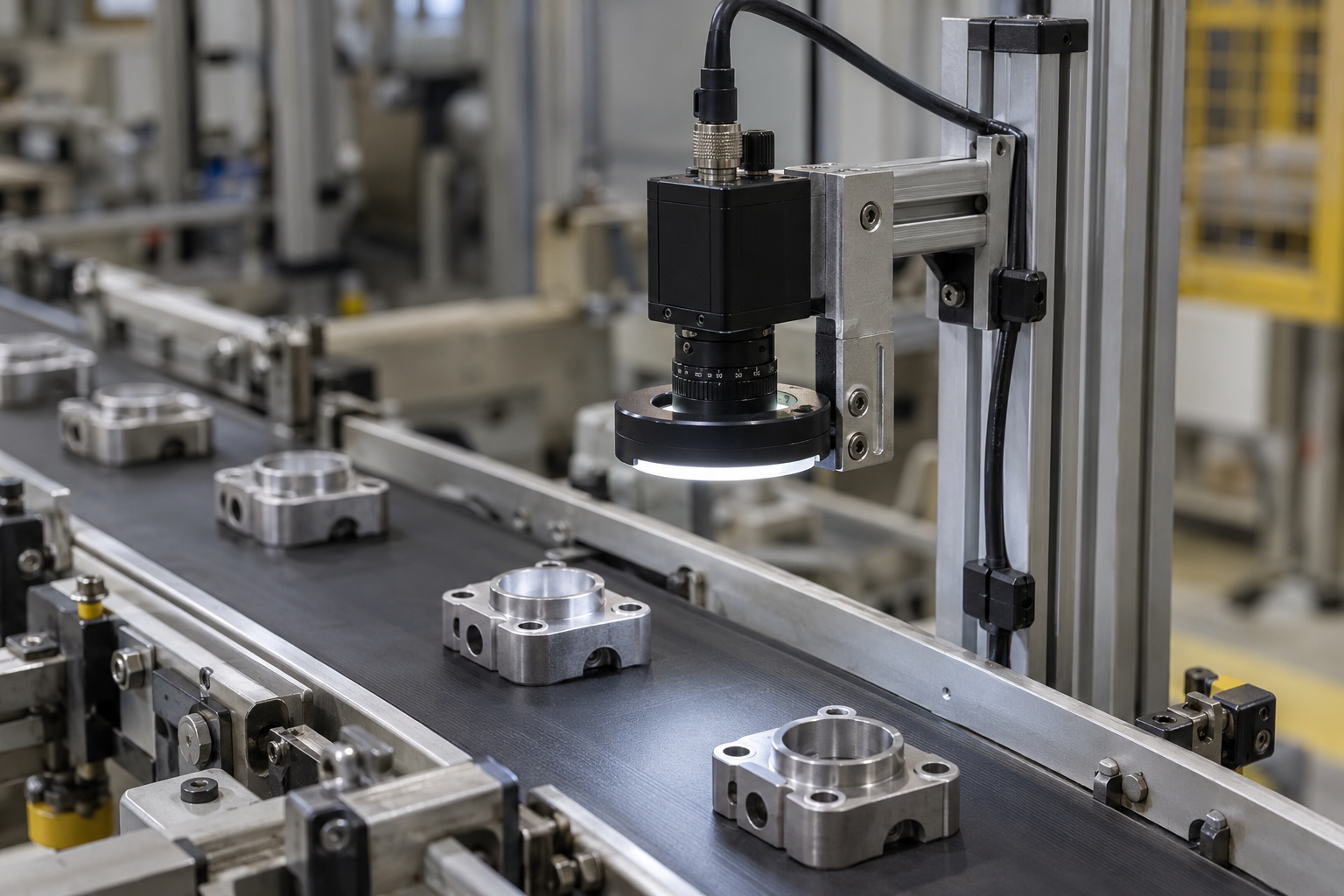
Inspection and identification technologies support specific decisions within a process.
A vision application may confirm presence, position, dimensions, code readability or a defined quality characteristic. Its performance depends on image acquisition and the conditions of the application, including lighting, focus and camera position.
A useful evaluation should include representative acceptable products, relevant defects and difficult samples.
The buyer needs agreed treatment of false rejects, missed defects and uncertain results, together with the action taken by the surrounding process.
RFID qualification requires attention to the reader, tag, frequency, mounting and operating environment. Materials such as metal and liquids can affect performance; application testing of the selected combination is therefore relevant.
Myralbe develops opportunities with quality teams, automation integrators, machinery manufacturers and traceability projects.
We help define the inspection or identification objective, coordinate samples and trials, and establish the decision criteria for progressing towards procurement.
Palletising systems must connect product handling to the complete end-of-line process.
Qualification should establish packaging formats, weights, product presentation, pallet patterns and the stability required for subsequent handling.
Gripper selection needs representative testing against the materials and products concerned.
The cell also needs a workable arrangement for empty pallets, layer materials where used, completed loads and rejected or irregular products.
Changeovers, available space and interfaces with conveyors or downstream wrapping affect the scope.
For depalletising, the incoming load condition and product arrangement can introduce further variation.
Myralbe approaches plant teams, machinery OEMs and end-of-line integrators around these requirements. We coordinate application information and technical exchanges, then follow proposals with attention to integration responsibilities, installation timing and the performance basis requested by the customer.
A useful opportunity identifies where the operation loses capacity, time, accuracy or reliability.
Relevant measures may include sustained and peak throughput, queue time, replenishment interruptions, order errors, changeover time, equipment availability and manual interventions.
Each measure needs a clear basis: product mix, shifts, peak period and activities included. This gives the supplier and customer a common starting point for evaluation.
Myralbe gathers the available operational information and records the questions requiring further technical investigation.
Performance discussions should establish what the customer will accept and under which conditions.
Relevant parameters can include product or order mix, measurement point, test duration, staffing, allowed interventions and treatment of interruptions elsewhere in the process.
Where included in the project, a factory acceptance test evaluates equipment before shipment, while a site acceptance test addresses the installed equipment and its real interfaces.
Myralbe helps clarify these commercial expectations before proposals are finalised. The supplier, integrator and appointed customer specialists conduct the technical validation and acceptance activities.
The customer’s investment extends beyond the equipment purchase.
Depending on the project, it can include integration, software, building modifications, installation, training, maintenance, spare parts and disruption during implementation.
Benefits also need a defined basis. Released working hours, increased capacity and reduced expenditure represent different outcomes and should be treated accordingly in the customer’s assessment.
Myralbe helps identify the information and assumptions requested for approval, coordinating responses with the manufacturer and the customer’s responsible teams.
Existing factories and warehouses bring established layouts, equipment and operating routines.
Automation may need to be introduced while the facility continues working. The diversity of existing warehouse structures makes site-specific planning a central part of these projects.
Qualification should address installation windows, phased deployment, temporary operating arrangements, software cutover, training and the responsibilities for returning the process to operation.
These requirements influence scope, timing and the partners needed to deliver the project.
For third-party logistics providers, the investment may serve a particular customer contract or a shared operation.
Evaluation should establish the remaining contract term, expected volumes, service commitments, building tenure and ownership of the proposed equipment.
The parties also need clarity on who finances the investment, who receives the benefit and whether equipment can be adapted or redeployed if requirements change.
Myralbe brings these questions into qualification so that discussions follow the actual investment and purchasing structure.
European machinery requirements need to be assessed against the equipment supplied, the integration scope and the responsibilities of the parties involved.
The EU Machinery Regulation 2023/1230 generally applies from 20 January 2027, replacing the Machinery Directive framework.
Customers and suppliers need to establish the applicable requirements for the project, including documentation, risk assessment, protective measures and conformity responsibilities.
Myralbe helps surface these requirements during commercial qualification and coordinate the requested information. Engineering design, safety validation and conformity assessment remain with the responsible manufacturer, integrator and qualified specialists.
Standardised interfaces can support integration between equipment and control systems, but their scope must be understood.
VDA 5050, for example, concerns communication between mobile robots and central control. It provides an interface framework and does not replace application safety assessment.
Procurement should establish supported functions, versions, load-transfer interfaces, control responsibilities and the testing required for the proposed installation.
Customers need practical arrangements for technical assistance, spare parts, maintenance and software support.
These should reflect the site’s shifts, the consequences of interruption and the skills available locally. Operators and maintenance teams also need suitable training and documentation.
Myralbe helps manufacturers assess local implementation and service partners and clarify the commitments included in the offer.
We identify the applications and customer situations that justify evaluation, then prioritise accounts with a credible operational reason to consider the technology.
We also establish whether the route leads through a direct customer, machinery OEM, system integrator, distributor or implementation partner.
Conversations establish the operation, current approach, reported constraint and decision process. This provides the manufacturer with the information needed to judge whether technical engagement is warranted.
We track open questions, clarify responsibilities and maintain contact between the manufacturer and the customer’s relevant teams.
Where a local partner is required, we assess its technical scope, customer access, implementation capacity and support arrangements.
This includes following scope changes, trial results, proposal feedback, delivery assumptions, integration costs and service commitments.
Activity and next actions can be maintained in the manufacturer’s CRM or an agreed shared system, giving its team a clear commercial history and a practical basis for deciding where to invest further effort.
Spanish-language commercial development across industrial plants, warehouses, logistics operators, machinery manufacturers and automation integrators.
Portuguese-language account development shaped around the application, local purchasing chain and implementation partners.
French-language commercial execution with the organisations evaluating, integrating, purchasing and operating automation technologies.
Additional mandates can be structured around the product, customer base and commercial resources required.
Your next opportunity may depend on reaching a plant with a defined handling problem, qualifying with an integrator, securing incorporation into a machinery platform or progressing an evaluation already underway.
Tell us what you manufacture, which applications it serves and where adoption is getting stuck. We can assess the accounts, purchasing routes and commercial work that would make a mandate useful.